

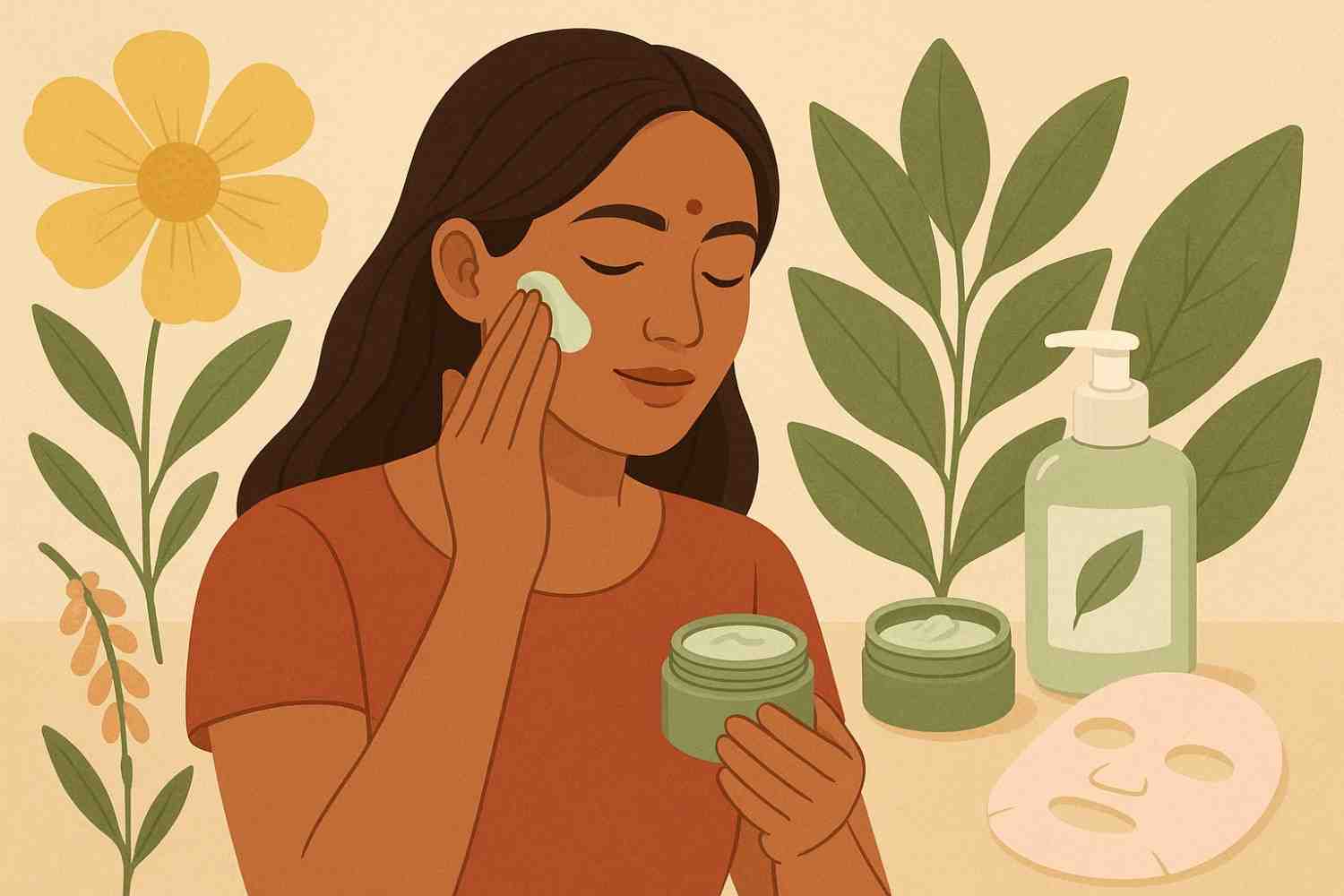
New Delhi, India, August 26, 2025 — In recent years, the beauty and skincare industry in India has undergone a dramatic transformation. Once dominated by traditional home remedies and mass-market cosmetic products, it is now being shaped by global trends, especially the Korean beauty wave, more commonly known as K-beauty. With its focus on innovation, multi-step routines, and natural ingredients, K-beauty has found a strong resonance in India. Interestingly, this influence has not diluted India’s love for natural skincare but has instead strengthened it, giving rise to a modern movement that blends tradition with global sophistication.
K-beauty’s arrival in India coincided with the rise of digital platforms and social media, where beauty influencers showcased elaborate skincare routines involving sheet masks, serums, and essences. Indian consumers, especially millennials and Gen Z, were captivated by the emphasis on glowing, healthy skin rather than heavy makeup. This approach matched perfectly with India’s long-standing belief that true beauty begins with skin health, echoing practices like Ayurveda and herbal remedies that prioritize nourishment from within.
One of the biggest ways K-beauty has influenced India’s natural skincare movement is through its reliance on plant-based and nature-derived ingredients. Popular K-beauty staples such as green tea, rice water, snail mucin, and ginseng resonated with Indian consumers who were already accustomed to natural ingredients like turmeric, neem, aloe vera, and sandalwood. This created a bridge between the global and the local, where Indian brands began reintroducing age-old remedies but in modern formulations that mirrored Korean product designs.
Another important aspect of K-beauty’s influence is the ritual of layering. Korean skincare popularized the idea that healthy skin requires more than just a single moisturizer or face wash. The multi-step routine, although simplified in India, encouraged people to invest time and patience in their skincare. This habit rekindled awareness of traditional Indian practices like oiling the skin, applying herbal packs, and cleansing with natural powders. Now, Indian consumers increasingly seek products that can be used together as part of a holistic routine, preferably with minimal chemicals and maximum natural goodness.
The packaging and presentation of K-beauty also played a vital role in shaping consumer expectations. Bright, appealing, and innovative product designs made skincare exciting and approachable. Indian natural skincare brands, which once leaned heavily on traditional-looking bottles and earthy tones, began adopting sleek, modern packaging without losing their herbal identity. This shift attracted younger audiences who wanted products that not only worked but also looked stylish on their bathroom shelves.
K-beauty’s focus on prevention rather than quick fixes also left a lasting impression. In India, where fairness creams and instant glow products once dominated the market, the narrative has now shifted toward long-term care and skin barrier health. This change encouraged Indian brands to educate consumers about the importance of sun protection, hydration, and gentle exfoliation, often using botanical ingredients. As a result, natural sunscreens, herbal serums, and plant-based moisturizers have gained popularity, reflecting a mix of Korean discipline and Indian heritage.
Moreover, the digital culture surrounding K-beauty inspired a new wave of skincare education in India. Tutorials, reviews, and product demonstrations made consumers more curious about what they were putting on their skin. They began reading ingredient lists and questioning harsh chemicals, pushing Indian brands to become more transparent and clean-label oriented. This demand for honesty and natural credibility has elevated the entire skincare industry, with Ayurveda-based companies and indie startups rising in prominence alongside global imports.
The influence is also economic. The popularity of K-beauty created space for collaborations and cross-cultural exchanges. Korean brands entering the Indian market often highlight their natural ingredients to align with Indian preferences, while Indian companies are exporting Ayurveda-inspired K-beauty hybrids to global markets. This synergy shows how cultural exchange is no longer one-sided but mutually beneficial, driving innovation in both regions.
In conclusion, the K-beauty wave in India has not replaced traditional skincare practices but has revitalized them. By showcasing how natural ingredients can be both effective and trendy, it has encouraged Indian consumers to embrace their heritage with fresh eyes. The result is a flourishing natural skincare movement that is rooted in Ayurveda but inspired by global innovation. As Indian consumers continue to blend the wisdom of the past with the creativity of the present, the skincare industry is set to evolve into a unique space where tradition and modernity coexist harmoniously.