IIC hosts landmark 10-day photo exhibition on India’s role in Korean War
April 20-30: Curated by Col. (Dr.) DPK Pillay, the exhibition will spotlight India’s humanitarian and diplomatic contribution to the Korean War through rare archival material, historic UN exchanges and a short film.

New Delhi: The India International Centre (IIC) is set to host a landmark photo exhibition from April 20 to April 30, chronicling India’s significant yet often under-recognised role in the Korean War. The exhibition will be held at the Quadrangle Gardens of the India International Centre on Max Mueller Marg, New Delhi, and will remain open daily from 11 am to 7 pm.
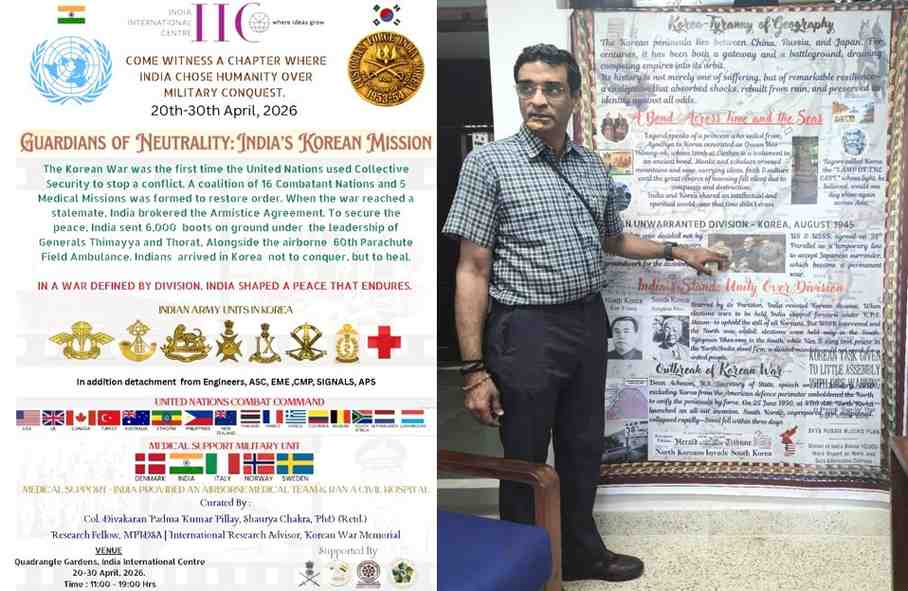
Curated by Col. (Dr) Divakaran Padma Kumar Pillay, Shaurya Chakra, PhD (Retd.), a Research Fellow at Manohar Parikkar Institute for Defence Studies and Analyses (MP-IDSA), and International Research Advisor to the Korean War Memorial in Seoul, the exhibition promises to reveal what organisers describe as a “new dimension” of India and Korea’s shared strategic history.
To enrich the public presentation, the exhibition will also include a short film based on archival material. According to Ambassador (Retd.) Skand R Tayal, Chairman, India-Republic of Korea Friendship Society, the film has been made possible through the generous support of the IRKFS Board Members and honorary consul generals of the Republic of Korea, Sardar J.D. Singh of Sigma Corporation, and Shiv Siddhant Narayan Kaul of NICCO Engineering Services, whose contribution has helped bring this historical narrative to a wider audience.
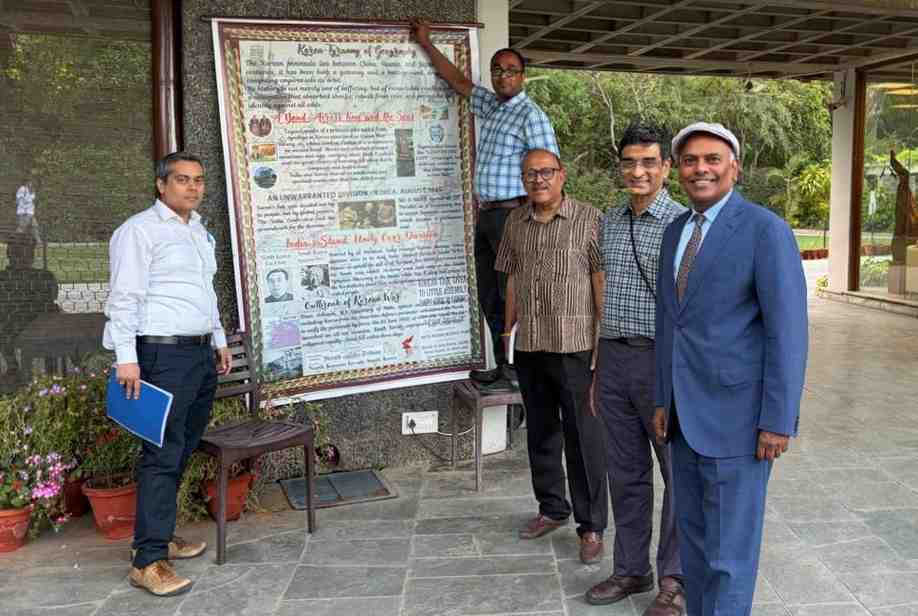
The showcase is part of a broader global initiative by the Korean War Memorial to document the distinct contributions of each nation that participated in the war.
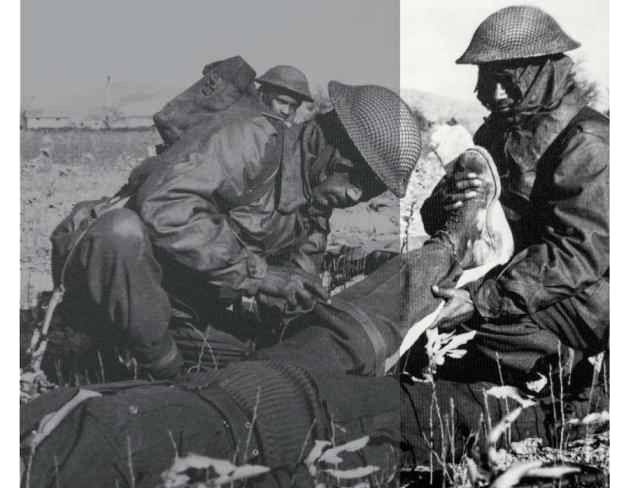
Drawing on unprecedented archival sources uncovered through Col. Pillay’s research, the exhibition will document the role of India’s forces in one of the most consequential conflicts of the 20th century. It will underline how India’s elite 60 Parachute Field Ambulance served with distinction in Korea, alongside detachments from several other Indian Army units, including Engineers, ASC, EME, CMP, Signals and APS. The exhibition’s central theme is expected to present India not as a conquering force, but as a nation that chose healing, neutrality and humanitarian duty amid a deeply divided war.
According to Col. Pillay, a major highlight of the exhibition will be its focus on India’s role in breaking the diplomatic deadlock over the repatriation of Prisoners of War. Organisers say the display will feature historic exchanges at the United Nations that helped pave the way for a solution to one of the war’s most complex humanitarian issues. After the signing of the Armistice Agreement, India assumed an even more crucial responsibility by appointing General K.S. Thimayya as Chairman of the Neutral Nations Repatriation Commission and contributing 6,000 troops to the Custodian Force under Lt Gen S.P.P. Thorat.
Col Pillay’s research also throws light on a remarkable example of international military logistics during that period. According to the curatorial narrative, the United States provided critical heli-lift support for the movement of 6,000 Indian soldiers into the Demilitarised Zone, underscoring the scale of multinational coordination involved in maintaining peace after the armistice. This operational and humanitarian dimension, organisers believe, adds depth to the understanding of India’s role in Korea beyond conventional military history.
The exhibition material also situates India’s contribution within the broader framework of the United Nations effort during the war. It notes that the Korean War marked the first time the UN used collective security to stop a conflict, bringing together 16 combatant nations and five medical missions. Within that international mission, India’s role stood out not only for its medical support but also for its peace-making and post-war stabilisation efforts.
The inaugural event will take place on April 20, 2026, at the India International Centre. With rare photographs, archival records, diplomatic history and military documentation, the exhibition is expected to offer visitors a compelling account of how India helped shape peace on the Korean Peninsula. In doing so, it will revisit a chapter of history that continues to be relevant to India-Korea relations today.
About the man behind the show Col. (Dr.) DPK Pillay:
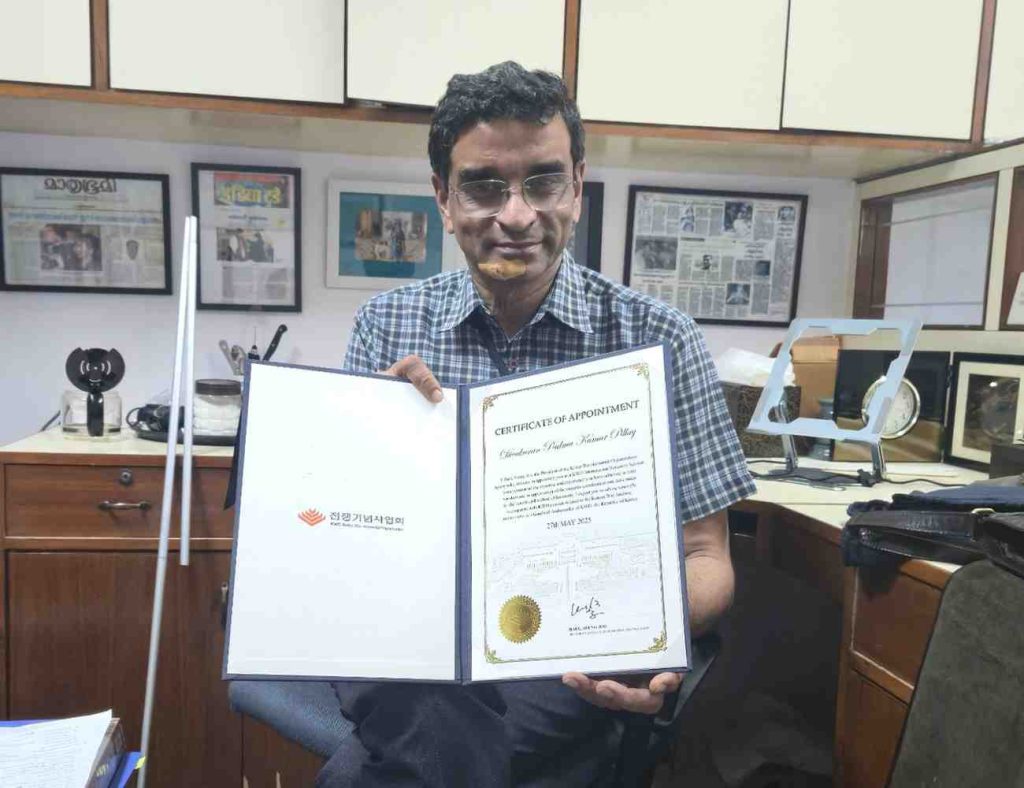 Colonel (Dr) Divakaran Padma Kumar (DPK) Pillay, SC (Retd), is a highly decorated former
Indian Army officer and a prominent research fellow specializing in human security and national
defence. During a 1994 counter-insurgency operation in Manipur, he was severely wounded—
sustaining four bullet wounds and a grenade blast—while leading a patrol. He was awarded the
Shaurya Chakra, India’s third-highest peacetime gallantry award, for his selfless actions. He is a
Research Fellow at the Manohar Parrikar Institute for Defence Studies and Analyses (MP
IDSA).
Last year, during his visit to the Korean War Memorial, Col. Pillay noticed that India’s contribution to extending a helping hand to South Korea during the Korean War was underplayed. He pointed it out to Baek Seung Joo, President, Korea War Memorial Organisation. Baek Seung Joo was impressed by Col. Pillay’s concern. It was within a month that the Korea War-memorial Organization (KWO) appointed Divakaran Padma Kumar Pillay as a KWO International Research Advisor.
The appointment was made in recognition of his expertise, professional experience, and valuable contribution towards the benefit and welfare of humanity. Through this appointment, he is expected to offer sincere advice, cooperate with KWO projects related to the Korean War Archive, and serve as a Goodwill Ambassador of KWO, Republic of Korea.