KOSME & NDIM Launch KBC (Korea Business Culture) Training Program
Empowering Students for Korean & Global Corporate Success.

New Delhi, India – As Korea and India deepen their educational and corporate ties, the need for culturally aware, industry-ready talent has become essential. In response to this growing demand, the Korea SMEs and Startups Agency (KOSME) and the New Delhi Institute of Management (NDIM) have introduced a transformative corporate readiness initiative: the KOSME-NDIM KBC (Korean Business Culture) Program.
 Designed to equip students with practical industry skills, professional confidence, and cross-cultural fluency, the program bridges the gap between academic learning and real workplace expectations, particularly for careers in Korean companies and multinational business environments.
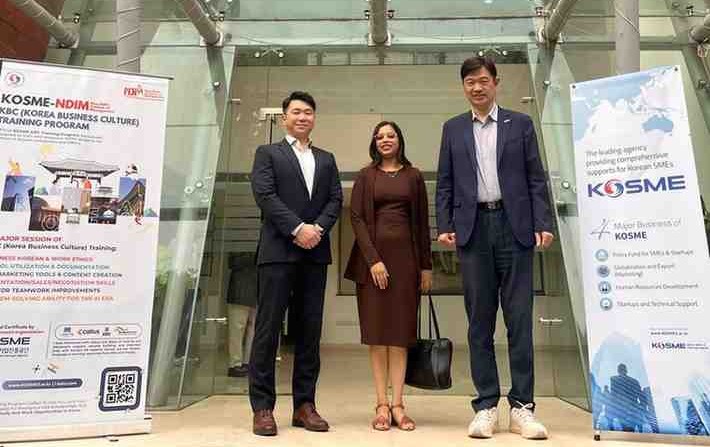
With the increasing presence of Korean global corporations and emerging industry-driven startups in India, the demand for graduates who can communicate effectively, adapt swiftly, and respond to real Korean workplace challenges has grown significantly. Acknowledging this need, Jae Kyeong Lee, Director at KOSME, initiated the launch of the KBC Program to prepare students for practical corporate environments. Developed in collaboration with NDIM, the program focuses on nurturing industry-ready, culturally fluent, and globally adaptable professionals who can excel in both Korean and international business settings.
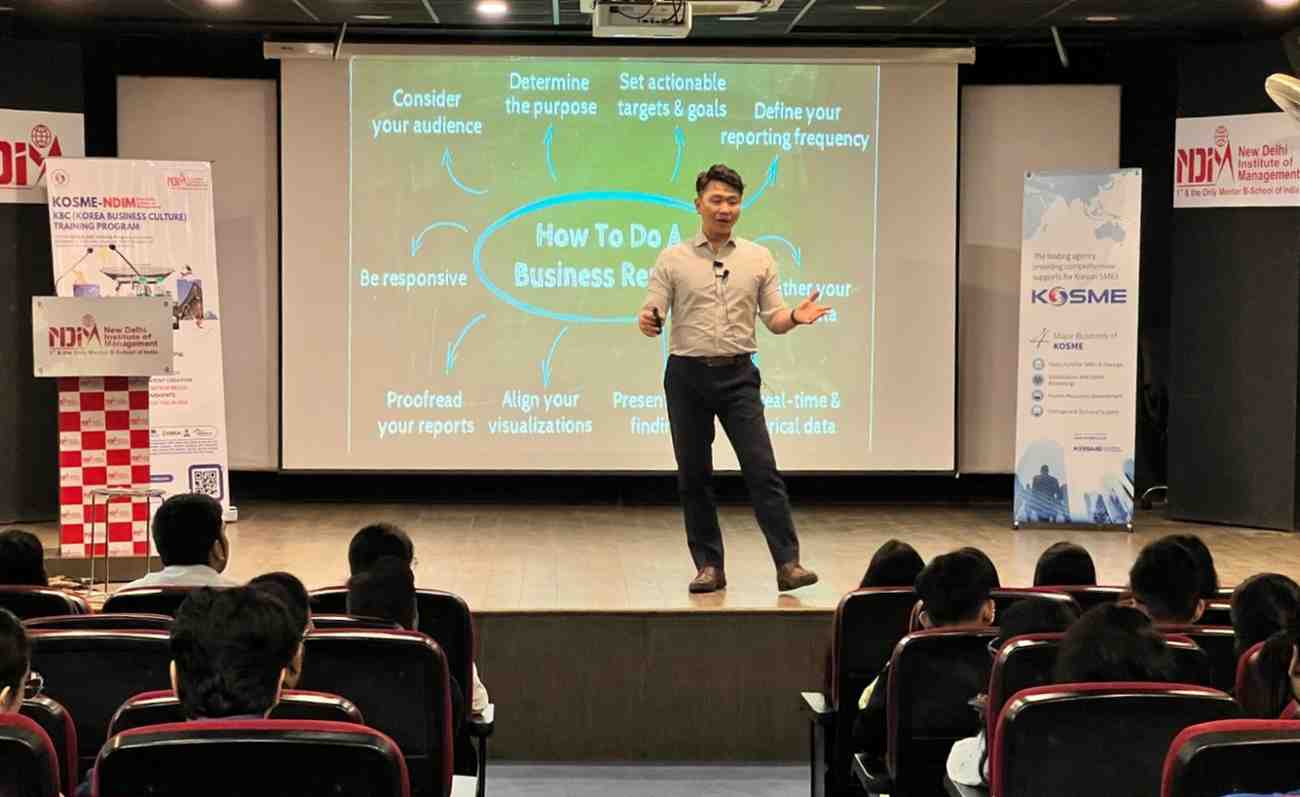
The program commenced on November 1, 2025, and was held at the NDIM campus in New Delhi. The inaugural masterclass was led by Seung Jung Kang, Director of I-KETS, a leading organisation specialising in Korean language instruction, business culture training, global education pathways, and AI-based learning solutions.
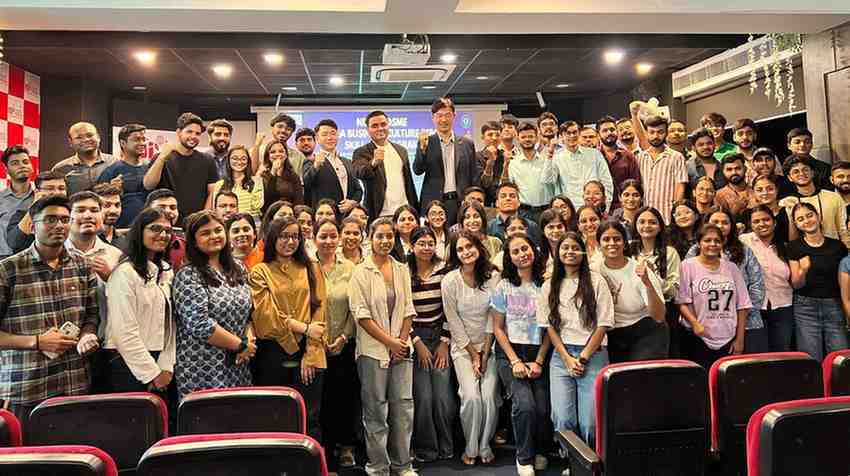 Kang’s session, titled “Unwritten Rules to Know When Working with Koreans,” introduced students to the cultural foundation of Korean professional environments, including communication protocols, organisational hierarchy, collaboration approaches, workplace discipline, and the values that shape decision-making. More importantly, the discussion translated cultural understanding into practical workplace behaviour, enabling students to learn how culture directly influences job performance.
The KBC Program emphasises application over theory. Rather than simply studying Korean work culture, students are guided in how to apply these principles in professional scenarios through case-based learning, simulations, and fundamental corporate communication exercises. The program also integrates training in modern workplace technologies, including AI-driven tools and digital collaboration platforms, ensuring students are equipped with both cultural and technical competencies. Offered in both online and offline formats, the program includes customised consultation sessions for career development and progression.
A dedicated Job Matching Event will follow the training phase, enabling NDIM students to connect directly with Korean and Indo-Korean companies seeking culturally prepared, high-performing talent. This placement-focused structure ensures the program extends beyond learning, ultimately supporting real career entry and professional mobility.
The session received an exceptionally positive reception from the NDIM community. Reflecting on the impact of the inaugural training, the NDIM Dean of the Training Department, Nikhil Singh, said, “You truly delivered today. The feedback from students has been overwhelmingly positive. Thank you for this impactful session. We look forward to achieving even greater milestones together.”
In recognition of the shared vision for global professional development, KOSME and NDIM will formalise the partnership through an MoU signing ceremony on 21st November 2025. Interest in the KBC Program has already expanded beyond NDIM, with numerous Indian universities initiating discussions to adopt similar collaboration frameworks.
The KOSME-NDIM KBC Program represents more than a skills training initiative. It is a step forward in strengthening India-Korea educational and economic cooperation, nurturing globally capable talent, and supporting students in building meaningful careers in international business landscapes. As cross-border collaboration continues to grow, such programs play a critical role in shaping culturally aware, industry-ready leaders of the future.