
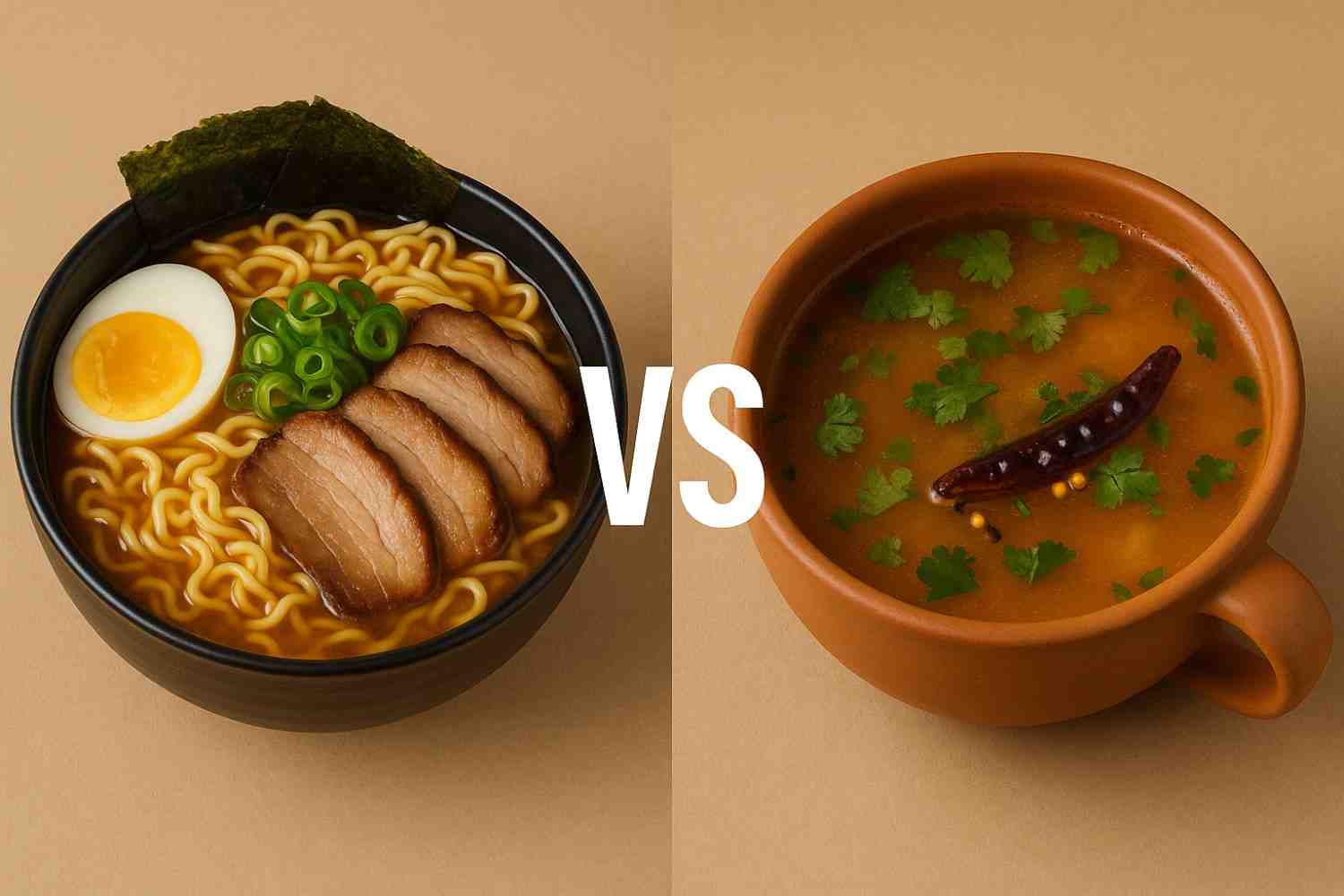
Ramen vs Rasam: A South Indian’s Guide to Japanese Soups

0

New Delhi, India, July 28, 2025 — When a South Indian encounters Japanese ramen for the first time, the reaction is often a curious blend of recognition and surprise. Ramen, with its hot, soupy base, rich aroma, and slurpy noodles, bears some unexpected parallels to the beloved South Indian rasam—a tangy, spicy broth served alongside rice. Though originating from vastly different cultures, both soups share a comforting warmth and a deep-rooted place in their respective culinary traditions.

Rasam, for most South Indians, is more than just a dish—it’s an emotion. Made with tamarind, tomatoes, black pepper, cumin, garlic, and sometimes lentils, rasam is known for its sharp, fiery flavor and its ability to comfort the stomach and soul alike. Ramen, on the other hand, is a Japanese noodle soup with various broths ranging from soy sauce and miso to pork bone, often topped with meats, boiled eggs, and seaweed. While rasam is typically thin and served with rice, ramen is a hearty, noodle-based meal in itself.

Despite these differences, both dishes share an emphasis on broth depth and balance of taste. Just like a rasam’s flavor depends on perfectly tempered spices and fresh herbs, a good ramen broth requires hours of simmering and thoughtful seasoning. Interestingly, the South Indian love for hot, spicy, soupy food finds a surprising cousin in the steamy bowls of ramen.

From a South Indian’s perspective, ramen feels like a distant, umami-rich cousin of rasam—less tangy, more meaty, but equally soul-soothing. While rasam is often associated with home-cooked simplicity and Ayurvedic healing, ramen brings in a layered complexity and indulgence that feels foreign yet inviting.

For those looking to experiment, a fusion of the two could even work—imagine rasam-flavored ramen noodles, blending peppery tamarind tang with the chewy satisfaction of ramen. In a world of global kitchens, such culinary mashups aren’t just possible—they’re welcome.

In the end, whether you choose rasam or ramen, you’re embracing a tradition of warmth, healing, and flavor. It’s not about choosing sides, but rather savoring the richness each culture brings to the humble yet powerful bowl of soup.

Ask ChatGP
Asian Logo After Post
Leave A Reply

Your email address will not be published.