
9 Indian Civil Servants – IAS, IRS, IRSE, & ITS Head to Japan for Higher Studies
Beginning this August, the selected officers will pursue postgraduate studies at prestigious Japanese institutions including the University of Tokyo, Waseda University, Hitotsubashi University, and Kobe University.

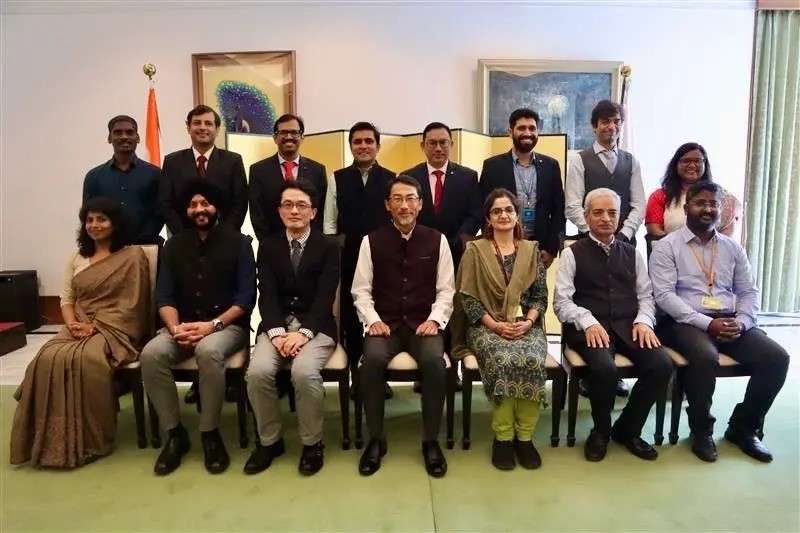
New Delhi, Tokyo – In a significant step towards developing future administrative leaders with specialization on Indo-Japan relations, a batch of nine promising and moderately young Indian civil servants has been selected to pursue two-year master’s programs at Japan’s top universities under the Japanese Government’s grant aid initiative — the Project for Human Resource Development Scholarship (JDS).
At a formal send-off ceremony hosted at the Embassy of Japan in New Delhi on Friday, August 1, these mid-career officers — representing India’s premier administrative services such as the Indian Administrative Service (IAS), Indian Revenue Service (IRS), Indian Railway Service of Engineers (IRSE), and Indian Telecommunication Service (ITS) — were congratulated and encouraged to act as enduring bridges between the two countries.
Beginning this August, the selected officers will pursue postgraduate studies at prestigious Japanese institutions, including the University of Tokyo, Waseda University, Hitotsubashi University, and Kobe University.
Japan’s Ambassador to India, Ono Keiichi, personally addressed the officers and remarked, “They will become a bridge between Japan and India. This is beneficial for both the Indian and Japanese governments. India needs Japan, and Japan needs India. For many, many years, we have helped each other. Japan is an ageing society, and we need more Indian people to come to Japan to support our industries so that we can help each other.”
Ambassador Ono also took to the social media platform X to share, “Nine promising young Indian civil servants are heading to top Japanese universities for graduate studies under the JDS programme. They’ve expressed a strong commitment to contribute to Viksit Bharat upon their return. Look forward to seeing them become enduring bridges between Japan and India.”
A Vision for the Future: The Indian JDS fellows selected this year, with an average age of 38.2 years, were chosen through a rigorous selection process involving multiple assessments. Most of them have served in pivotal government roles across states and departments, and their selection reflects both professional merit and commitment to public service.
One of the selected fellows, speaking on behalf of the group during the ceremony, said, “We are deeply honoured to represent India in this academic and cultural exchange. We aspire to return with enhanced perspectives and contribute meaningfully to administrative reforms and national development goals.”
The event also featured addresses by a Government of India representative and a senior official from JICA, both of whom lauded the officers for their achievements and encouraged them to embrace the unique opportunity for cultural exchange and academic enrichment in Japan.
As India and Japan continue to collaborate on regional stability, economic resilience, and knowledge partnerships, initiatives like the JDS program are vital in shaping a new generation of leaders committed to cross-border cooperation and inclusive growth.
About the JDS Program: Launched in 1999 by the Government of Japan as part of its ‘100,000 Foreign Students Plan’, the Project for Human Resource Development Scholarship (JDS) aims to nurture young government officials in partner countries by providing them with opportunities to gain advanced academic knowledge in Japan. The program is implemented through the Japan International Cooperation Agency (JICA) and is fully funded by the Japanese government.
Through their academic training in Japan, the selected scholars are expected to return to their home countries as catalysts of policy reform, innovation, and development.
India officially joined the JDS program in 2024, aligning it with its ambitious ‘Viksit Bharat 2047’ vision — a roadmap that seeks to transform India into a developed nation by the time it completes 100 years of independence.
Strengthening Bilateral Mobility: Japan and India have significantly enhanced their people-to-people ties in recent years. In 2021, both nations signed a Memorandum of Cooperation (MoC) on Specified Skilled Workers (SSW), creating a structured mobility pact that enables Indian workers with technical expertise and Japanese language proficiency to contribute to Japan’s industries across 14 sectors — including aviation, agriculture, and fisheries.
Currently, over 51,000 Indian nationals live in Japan, making them the third-largest South Asian diaspora group after Nepalis and Burmese. This growing Indian presence in Japan is seen as a reflection of deepening mutual trust, shared democratic values, and a converging strategic vision.

Something I dream about being a civil servant going to Japan to experience & work there plus study (privilege)