Fifteen Years of the Korea–India CEPA: Achievements and Strategic Directions for Future Development
By Professor Mee Jin Cho, Department of Economics, Trade and Statistics, Myongji University

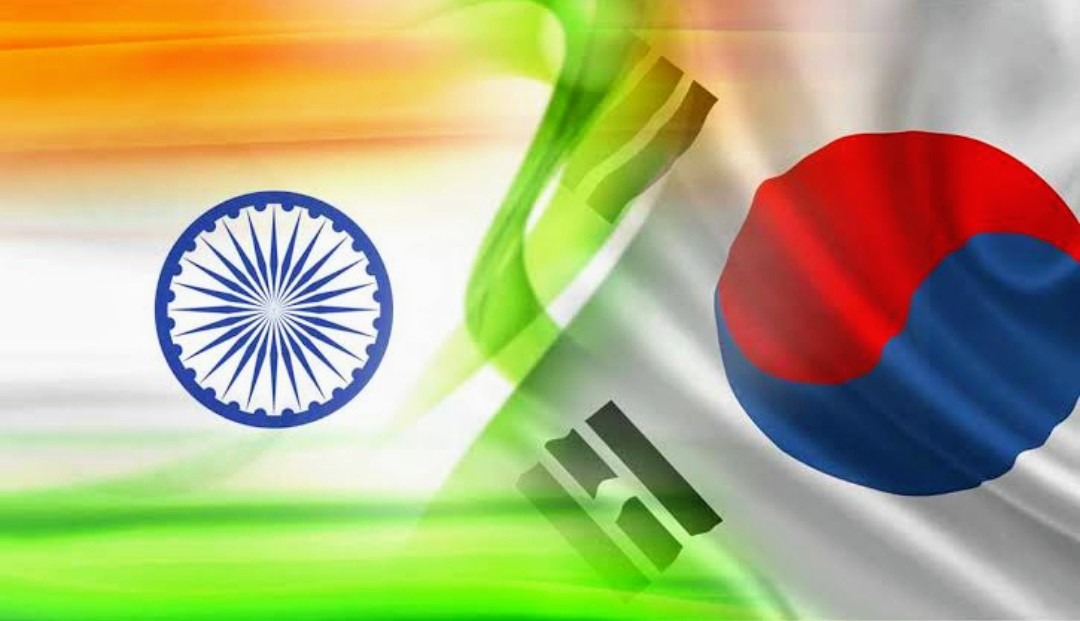
 In February 2026, Korea hosted the Korea–India Economic Cooperation Conference under the theme “The Future of Korea–India Economic Cooperation for Shared Prosperity.” The conference provided an in-depth discussion on ways to significantly strengthen economic cooperation with India, which is rapidly emerging as a key hub in global supply chains and a next-generation manufacturing base. During the event, a long-term goal was officially announced to expand bilateral trade from the current level of approximately USD 25 billion to USD 200 billion, comparable to Korea’s trade volume with ASEAN.
Ranked fourth in global GDP and home to the world’s largest population of 1.4 billion people, India is projected to become the world’s third-largest economy within the next decade, following the United States and China. In response, major global economies have been actively pursuing new free trade agreements (FTAs) with India. Beginning with the agreement with Mauritius in 2021, India signed a Comprehensive Economic Partnership Agreement (CEPA) with the United Arab Emirates in May 2022 and brought into force the Economic Cooperation and Trade Agreement (ECTA) with Australia in December of the same year.
Subsequently, the Trade and Economic Partnership Agreement (TEPA) with the four member states of the European Free Trade Association (EFTA) entered into force in October 2025. In the same year, India concluded a Comprehensive Economic and Trade Agreement (CETA) with the United Kingdom in July and a CEPA with Oman in December. Furthermore, FTA negotiations with New Zealand were concluded in December 2025, followed by the successful conclusion of negotiations with the European Union in January 2026.
Amid the expanding global network of partnerships with India, Korea had already laid the foundation for bilateral economic cooperation by bringing the Korea–India CEPA into force in January 2010. From Korea’s perspective, the agreement was particularly significant as it represented the first bilateral economic pact with a BRICs country that was emerging as a new axis of the global economy.
It enabled Korea to secure an early strategic foothold in the vast Indian market, ahead of competitors such as Japan and the European Union. The Korea–India CEPA extends beyond the liberalization of trade in goods to encompass services, investment, intellectual property, and economic cooperation. For India, it also holds significance as its first FTA with an OECD member country, making the agreement mutually meaningful for both nations.
As of 2024, bilateral trade between Korea and India stands at approximately USD 25 billion, representing a 1.5-fold increase from about USD 17 billion at the time of the CEPA’s entry into force in 2010. Korea primarily exports steel plates, semiconductors, synthetic resins, and automobiles, while India exports petroleum products, aluminum, agrochemicals and pharmaceuticals, and vegetable materials. As illustrated in Figure 1, the proportion of Korea’s imports of raw materials and intermediate goods from India has steadily increased since the CEPA’s implementation, indicating a structural rise in Korea’s dependence on India for key industrial inputs. While this trend reflects Korea’s growing utilization of India as a major supplier of materials and components, it also highlights the limitation of a trade structure concentrated on specific commodities.