
From One Smart Remote to Glasses-Free 3D: Six Taiwanese Firms Showcase Everyday Technologies in Delhi
Products presented at the TWIN Dialogue ranged from energy-saving AI chips and intelligent power management to cybersecure surveillance, immersive displays and infrastructure connecting smart cities and factories.

New Delhi: Imagine converting an existing air conditioner into a smart appliance without replacing it, watching ordinary mobile-phone content in three dimensions without wearing special glasses, or using an intelligent streetlight to simultaneously manage illumination, monitor traffic and measure air quality.
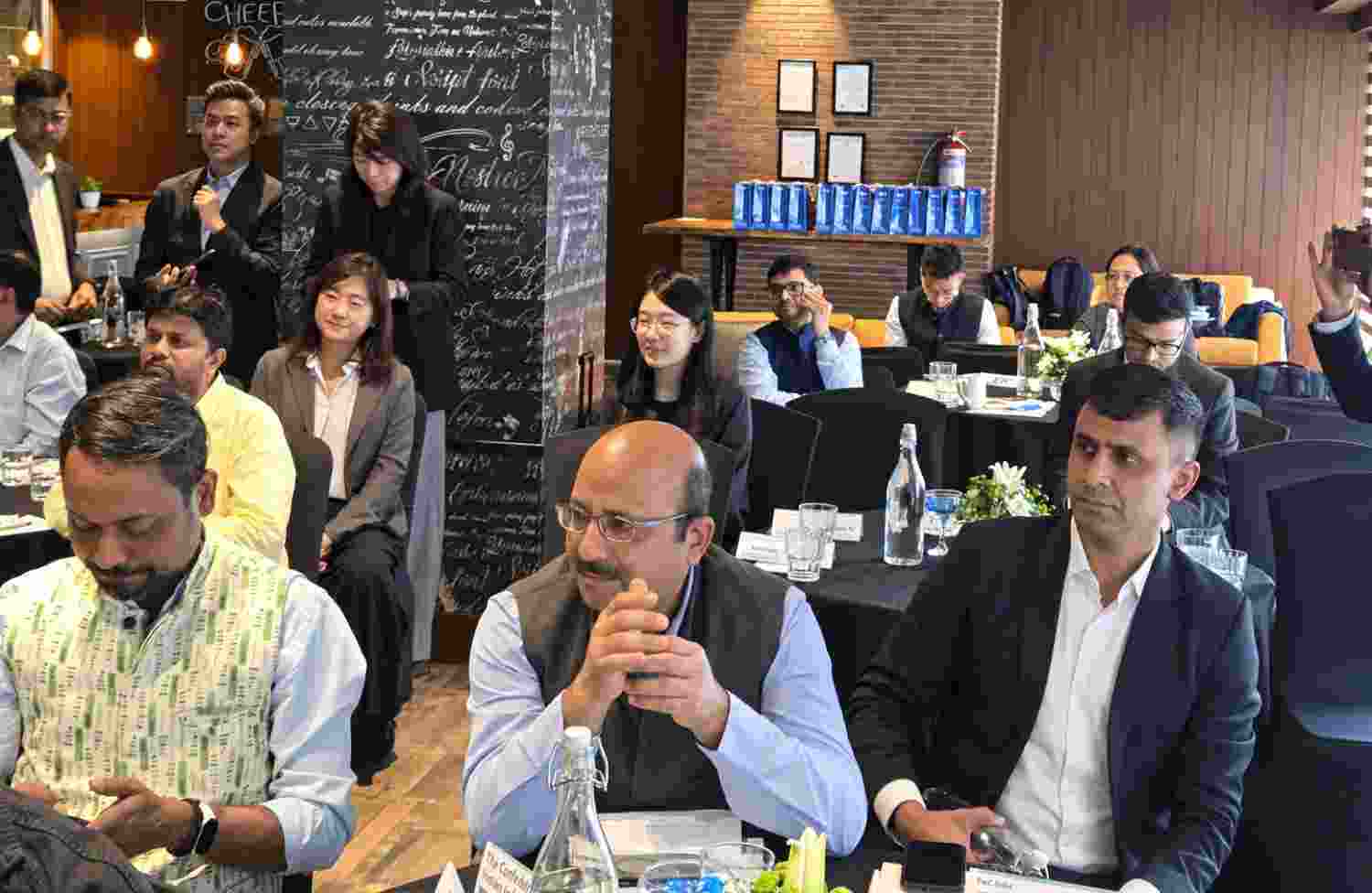
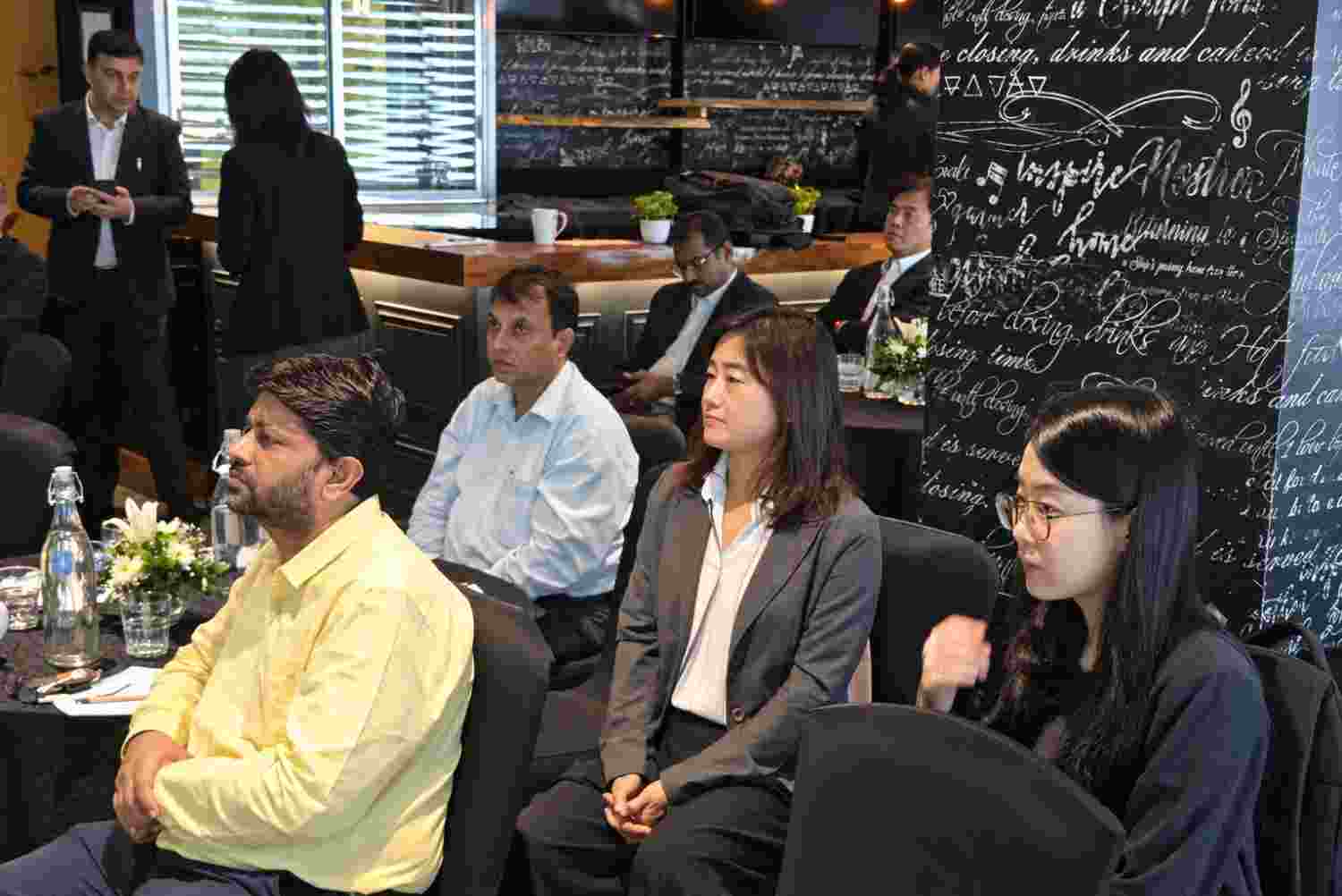
These were among the practical and potentially transformative applications presented by six Taiwanese technology companies at the TWIN Dialogue Matchmaking Luncheon in New Delhi on September 21.
Representatives of AIFA Technology, Alpenglow Tek, Apollo Power, Vacron, OPTIQB and SMANEX introduced technologies spanning smart homes, wearable healthcare, artificial intelligence, clean energy, surveillance, cybersecurity, visual entertainment and industrial connectivity.
Their presentations gave the gathering a glimpse of how Taiwan’s strengths in hardware and electronics could meet India’s demand for consumer-friendly innovation, smarter infrastructure and energy-efficient industrial development.
The programme, organised by the Foundation for Commerce and Culture Interchange and Taipei Computer Association, was designed to help the companies identify Indian partners rather than merely display their products. The presentations were followed by direct business matchmaking during the networking luncheon.
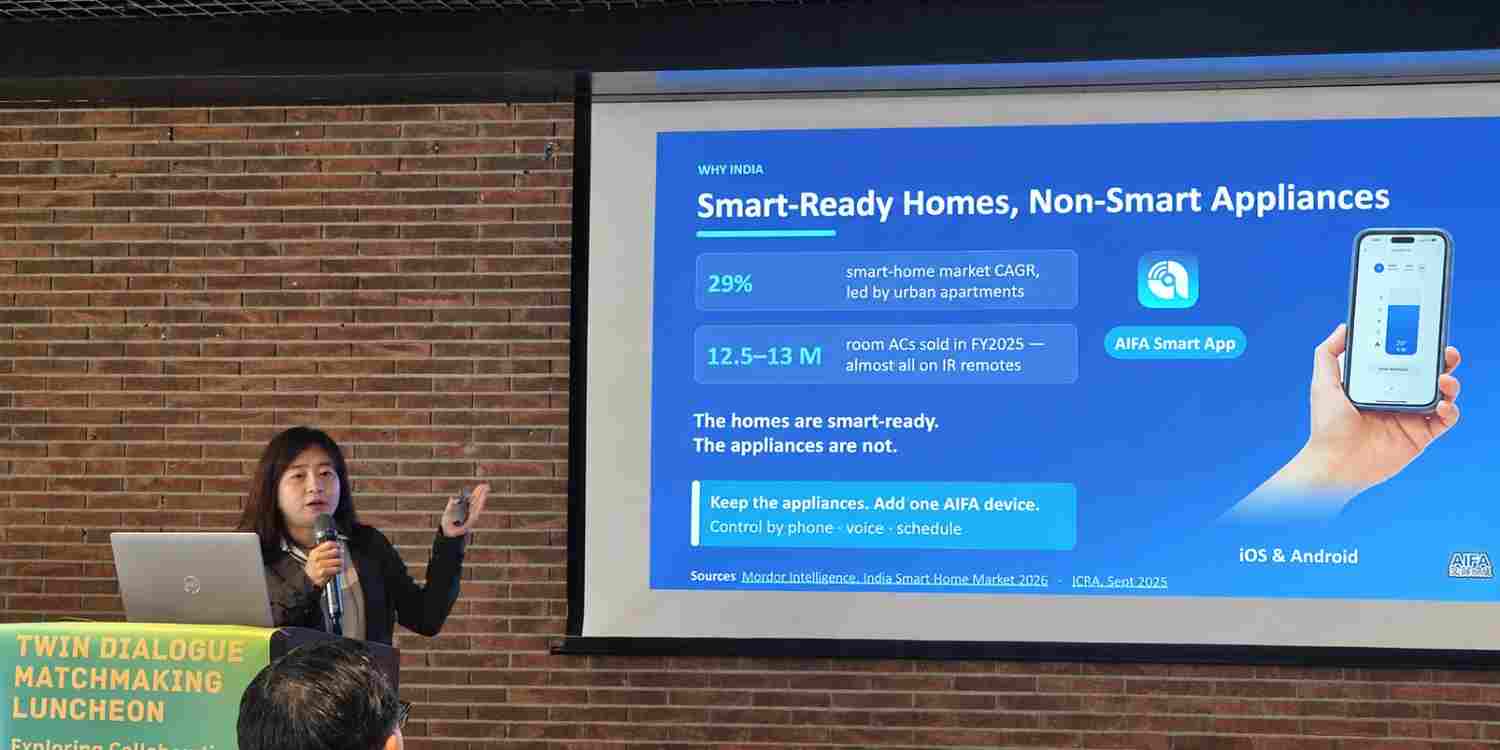
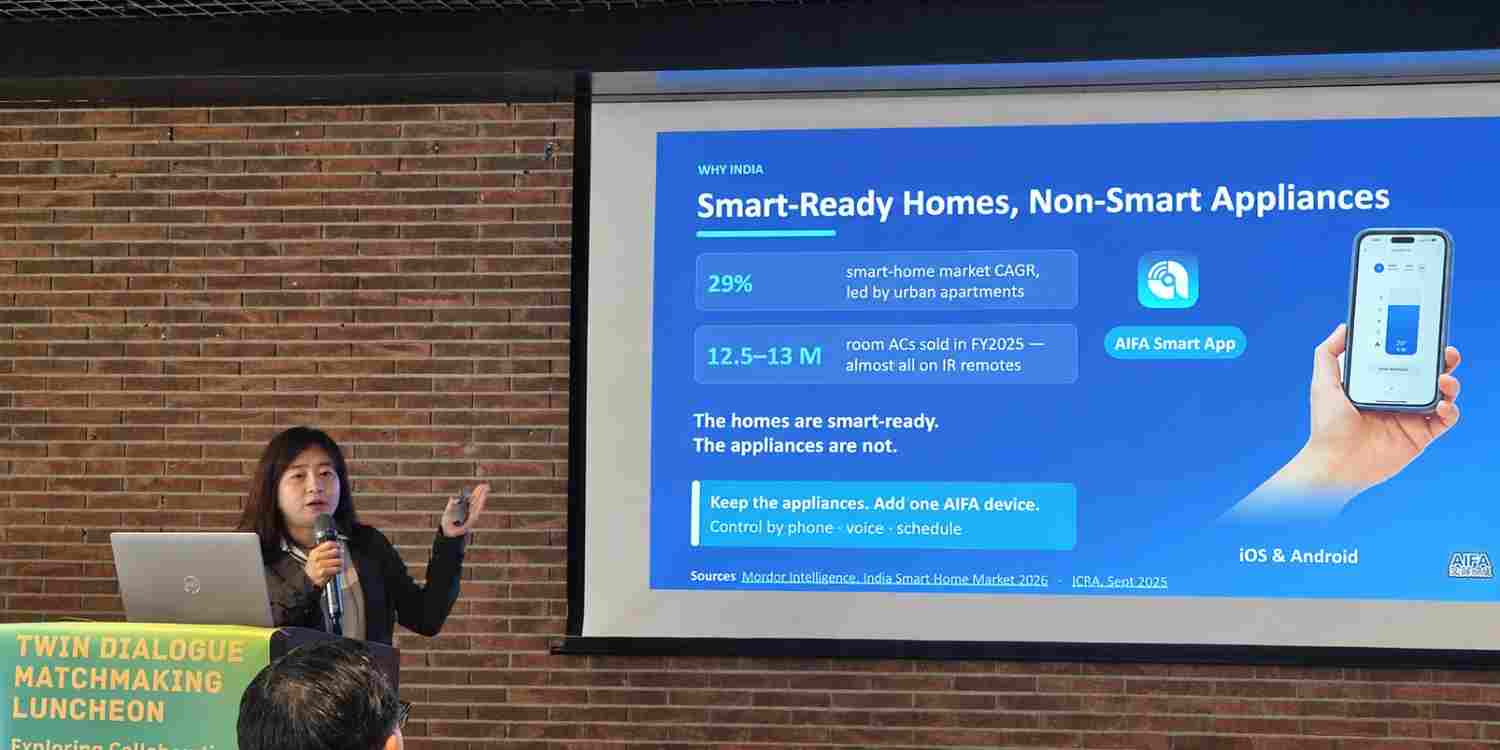 A remote control that makes old appliances smart: AIFA Technology presented one of the most easily relatable applications: technology that can bring ordinary home appliances into the connected-home ecosystem without forcing families to replace devices that still work.
Represented by Linda Lee, AIFA showcased smart infrared remotes and controller solutions that can connect traditionally operated appliances—including televisions, air conditioners, fans, set-top boxes and entertainment systems—to a smartphone.
Its i-Ctrl Pro controller consolidates multiple conventional remote controls into a mobile application. It lets you operate compatible appliances remotely over the internet and supports scheduling, customised scenes, location sensing, and voice commands through services such as Google Home, Amazon Alexa, and Siri. The device also has temperature and humidity sensors, enabling users to monitor their homes remotely and create automated operating routines.
 In everyday use, this could mean switching on an air conditioner before arriving home, checking the room temperature while away, turning off an appliance accidentally left running, or creating a “movie mode” that controls several devices with a single command.
For cost-conscious households, the appeal is upgrading existing appliances instead of buying an entirely new generation of connected devices.
Tiny AI chips with big implications for healthcare: Alpenglow Tek moved the conversation from household convenience to ultra-low-power artificial intelligence.
The company’s representative, Mark Chen, introduced edge-computing chips designed for wearables and intelligent health-monitoring devices. According to the presentation, the chips can consume up to 100 times less energy without compromising performance.
 This matters because wearable health devices must continuously process signals while operating on extremely limited battery power. Alpenglow Tek says its ANIX technology is intended for always-on sensing in products ranging from vital-sign monitors to implantable medical devices, enabling real-time analysis of physiological signals. It can also support consumer products such as wireless earphones and industrial sensors used for predictive maintenance.
By processing information directly on a device instead of constantly sending raw data to a remote cloud server, edge AI can deliver quicker responses, reduce network dependence and extend battery life.
In practical terms, the technology could enable smaller health monitors that last longer, wearable devices that continuously monitor vital signs, and industrial sensors that warn factories about equipment abnormalities before a breakdown occurs.
AI to cut energy waste and support net-zero goals: Apollo Power, represented by Sun Hsieh, focused on the growing pressure on businesses to control electricity consumption and meet environmental commitments.
The company presented an AI-driven energy-management system designed to monitor power consumption, improve efficiency and support net-zero compliance.
Apollo Power’s platform connects functions such as carbon accounting, power-generation monitoring, energy storage and renewable-energy procurement. Real-time power monitoring and AI-based load forecasting can help companies identify unusual consumption patterns, avoid exceeding contracted capacity and reduce the risk of disruptions or penalties.
 Such technology could be highly relevant in India, as factories, commercial buildings, and data centres face the twin challenge of rising electricity demand and pressure to reduce emissions.
Rather than discovering energy waste only after receiving a high monthly bill, an intelligent platform can continuously track where electricity is being consumed and suggest corrective action. For large manufacturers, even a relatively small improvement in energy efficiency can translate into substantial financial savings.
Cybersecurity built into surveillance: Vacron, the surveillance brand of Fuho Technology, highlighted the security risks as cameras, recorders, and other monitoring equipment become part of connected digital networks.
Represented by Roger Lo, the company introduced end-to-end original design manufacturing solutions that integrate cybersecurity into surveillance systems.
Vacron has more than three decades of experience in the surveillance sector and offers security products and monitoring solutions for fixed and mobile applications. Its portfolio includes network and digital video recorders, cameras and systems used in vehicles and fleet management.
The emphasis on built-in cybersecurity reflects a major shift in surveillance. A camera is no longer simply a device recording pictures; once connected to a network, it can also become a potential entry point for cyberattacks.
For homes, businesses, transport fleets and public infrastructure, secure surveillance therefore requires protecting both the physical environment being monitored and the digital system carrying the video and data.
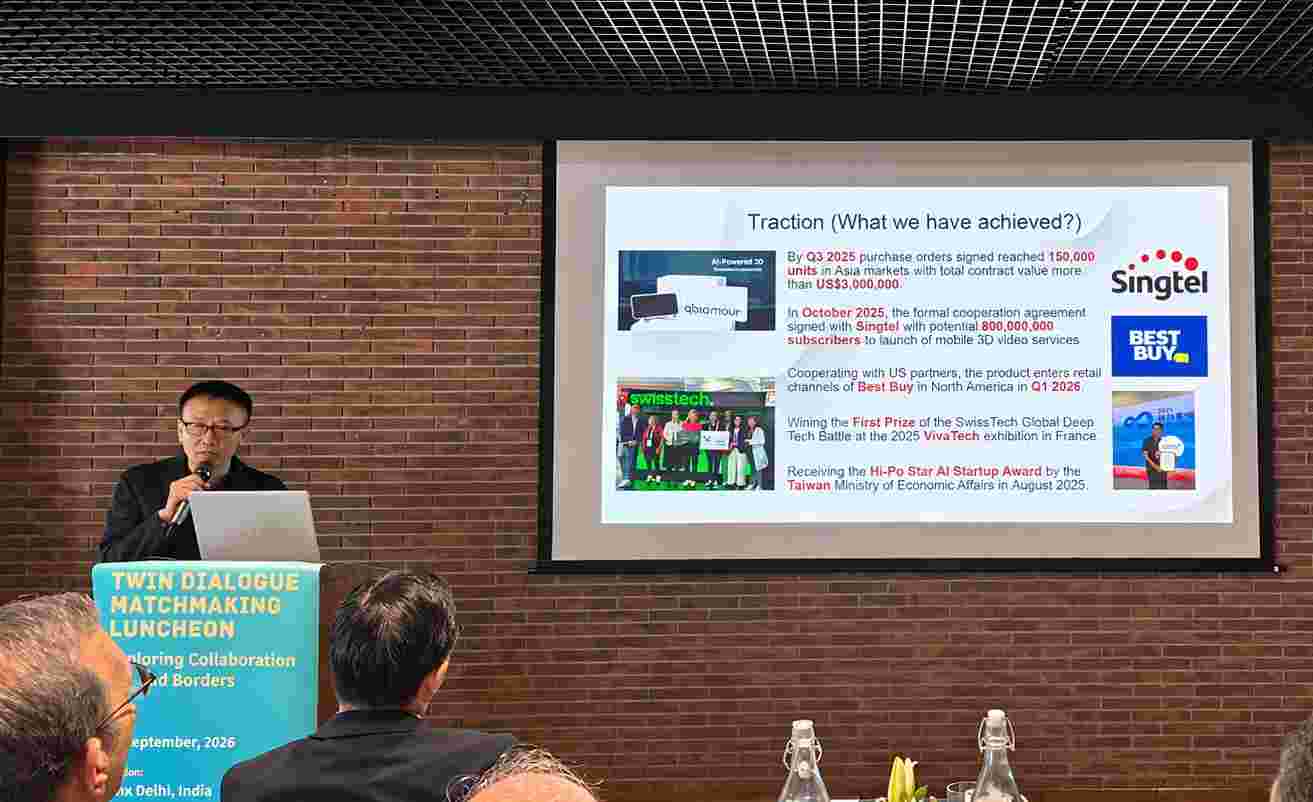
Turning a normal screen into a 3D experience: Among the most visually striking technologies came from OPTIQB, represented by Jye Lin.
The company introduced glasses-free three-dimensional display technology that transforms standard 2D content into an immersive 3D viewing experience without conventional 3D glasses or bulky virtual-reality headsets.
The technology uses AI-powered rendering and optical display techniques to create depth on compatible screens. OPTIQB is developing the technology for integration with smartphones, content platforms and other digital-display applications.
Its possible uses extend beyond entertainment. While consumers could watch videos, play games or view photographs in 3D, similar technology could eventually support education, medical visualisation, product demonstrations, automobile displays and digital advertising.
For a student studying anatomy, an engineer examining a product model or a customer exploring an item online, a convincing three-dimensional representation could communicate information that a flat image cannot.
The hidden technology behind smart cities: SMANEX completed the technology showcase with industrial AIoT gateways—the less visible but essential infrastructure that lets machines, sensors, and software platforms communicate.
Its edge-computing gateways can collect data from industrial equipment, process it locally and connect older machinery with modern networks. The technology supports applications across solar energy, water treatment, oil and gas, traffic management and factory automation, while offering connectivity through Ethernet, Wi-Fi, serial interfaces and cloud-compatible communication protocols.
In a smart city, the company’s technology can support intelligent streetlights that adjust brightness based on pedestrian and traffic conditions. The same infrastructure can collect information on road temperature, humidity, noise and air quality, allowing municipal authorities to manage energy and respond to environmental problems.
For factories, such gateways can help connect legacy equipment that was built long before cloud computing or the Internet of Things. Managers can then monitor machines remotely, identify abnormal behaviour and compare performance across different locations.
Taken together, the six presentations demonstrated that advanced technology does not always arrive as a futuristic machine. It can appear as a single remote replacing many, a wearable operating longer on one charge, software preventing electricity waste, a safer surveillance network, a screen acquiring depth or a small gateway helping an entire factory communicate.
The greater test following the TWIN Dialogue will be whether these technologies can find Indian partners, adapt to local conditions and move from short presentations in New Delhi to homes, hospitals, factories and cities across the country.