Korean Monks and Nalanda: A Timeless Bond Rekindled at KCCI Book Concert
From the pioneering footsteps of monk Hyecho to the cultural dialogues of today, Nalanda's legacy lives on in Korea, inspiring generations across centuries.

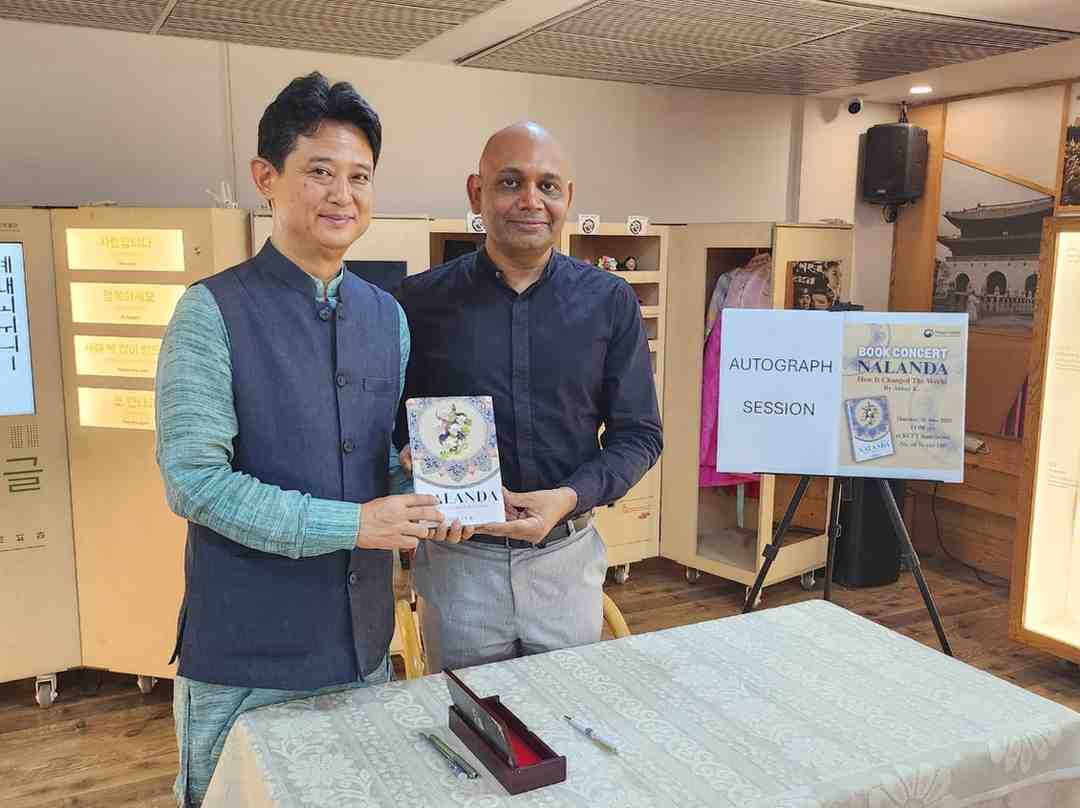
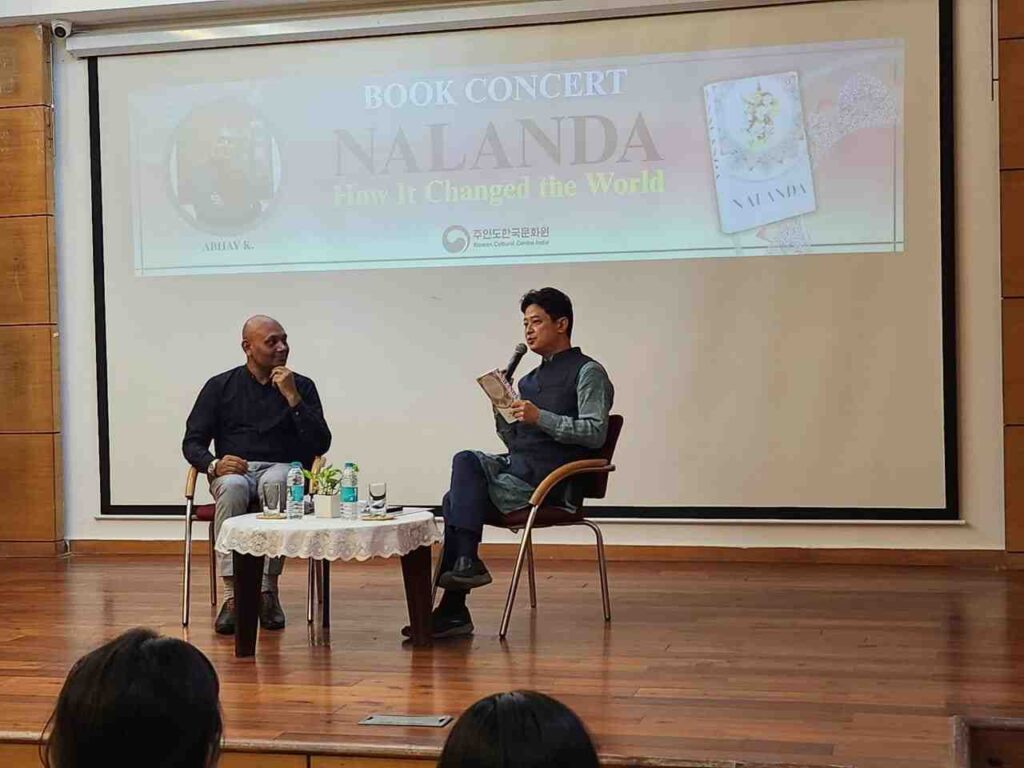
New Delhi, India — The ancient ties between Korea and India were illuminated once again during a profound book concert on “Nalanda” held at the Korean Cultural Center India (KCCI) in New Delhi. The event featured insightful discussions by Abhay K, former ambassador to Madagascar and current Deputy Director General at the Indian Council for Cultural Relations (ICCR), and Deputy Chief of Mission LIM Sang Woo of the Korean Embassy, who revisited Nalanda’s timeless appeal among Korean scholars. LIM Sang Woo also served as Ambassador in Madagascar, where he met Abhay K.
 Nalanda University, which flourished between the 5th and 13th centuries CE, has long captivated the imagination of scholars in East Asia. While Chinese monks like Xuanzang and Yijing are well-documented figures who studied and chronicled life at Nalanda, it was the Korean monk Hyecho (also known as Prajnavikrama) who first popularized Nalanda in Korea, opening the door to a remarkable cultural and scholarly exchange that endures to this day.
Hyecho, hailing from the ancient Silla kingdom, embarked on his journey to India in 723 CE. His travelogue, “Memoir of the Pilgrimage to the Five Kingdoms of India,” discovered centuries later in the Dunhuang caves of Western China, offers invaluable insights into Buddhist practices and the intellectual fervor of the Nalanda Mahavihara.
Hyecho studied under eminent Indian masters, such as Subhakarasimha and Vajrabodhi, and spent three formative years at Nalanda. His vivid accounts not only deepened Korea’s understanding of Indian Buddhism but also cemented Nalanda’s reputation as a beacon of knowledge in Korea.

Following Hyecho’s trailblazing journey, other Korean monks, such as Heo Chung and Aryabhara, ventured to Nalanda, further enriching the intellectual and spiritual tapestry between the two cultures. Heo Chung’s memoirs describe rigorous studies under leading Indian and Chinese monks, and his dedication to translating and copying sutras helped disseminate Buddhist teachings back home.
The presence of small commemorative stupas for Korean monks at Nalanda stands as a silent testament to their contributions and sacrifices.
During the KCCI session, Abhay K shared personal reflections from his childhood spent near the ruins of Nalanda, underscoring the emotional and historical significance of the site. He spoke of his book that weaves historical research with personal narratives to portray Nalanda as more than just an archaeological marvel — it is a living symbol of cross-cultural enlightenment.
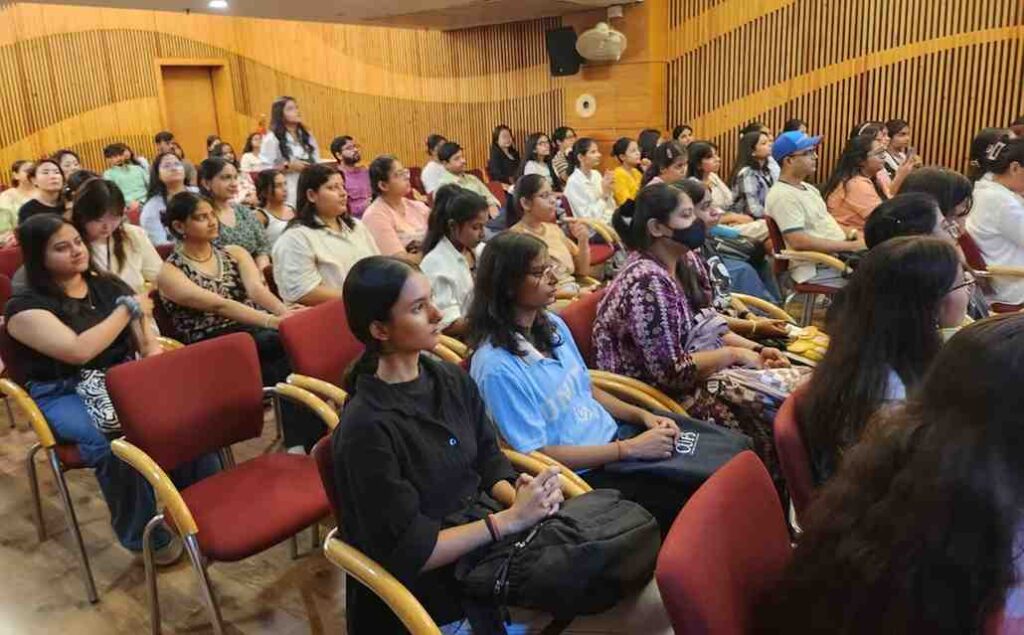 LIM Sang Woo highlighted how Korean monks’ devotion to learning in India contributed to Korea’s rich Buddhist heritage, shaping not only religious practices but also cultural and philosophical thought. The discussions expanded to encompass Nalanda’s remarkable repository of over nine million manuscripts, its pioneering contributions to philosophy, grammar, and medicine, and its role in nurturing scientific milestones, including the concept of zero — innovations that would eventually ripple across the world.
The book’s conclusion emphasized the enduring value of Nalanda as a bridge between civilizations. The idea that a single Korean monk’s quest for knowledge could have so profoundly popularized an Indian university illustrates the transformative power of cultural exchanges. Today, as Nalanda University seeks to revive its ancient glory, these centuries-old ties continue to inspire new dialogues, research, and collaborations, strengthening the shared intellectual and spiritual legacy between India and Korea.
About the author:
ABHAY K. is the author of a dozen poetry books, including Celestial, Stray Poems, Monsoon, The Magic of Madagascar, and The Alphabets of Latin America, and is the editor of The Book of
Bihari Literature, The Bloomsbury Book of Great Indian Love Poems, Capitals, New Brazilian Poems, and The Bloomsbury Anthology of Great Indian Poems.
His poems have appeared in over a hundred literary magazines, including Poetry Salzburg
Review and Asia Literary Review. His Earth Anthem has been translated into over 160 languages. Abhay received the SAARC Literary Award (2013) and was invited to record his
poems at the Library of Congress, Washington, D.C., in 2018. His translations of Kalidasa’s
Meghaduta and Ritusamhara from Sanskrit won him the KLF Poetry Book of the Year Award
2020-21). Penguin has published his translation of the Magahi novel Fool Bahadur
Random House India. Abhay’s paintings on the Buddhist philosophy of ‘Sunyata’ have
been exhibited at the Bihar Museum, Patna, and the National Museum, New Delhi. Abhay K.
can be reached at www.abhayk.com.