

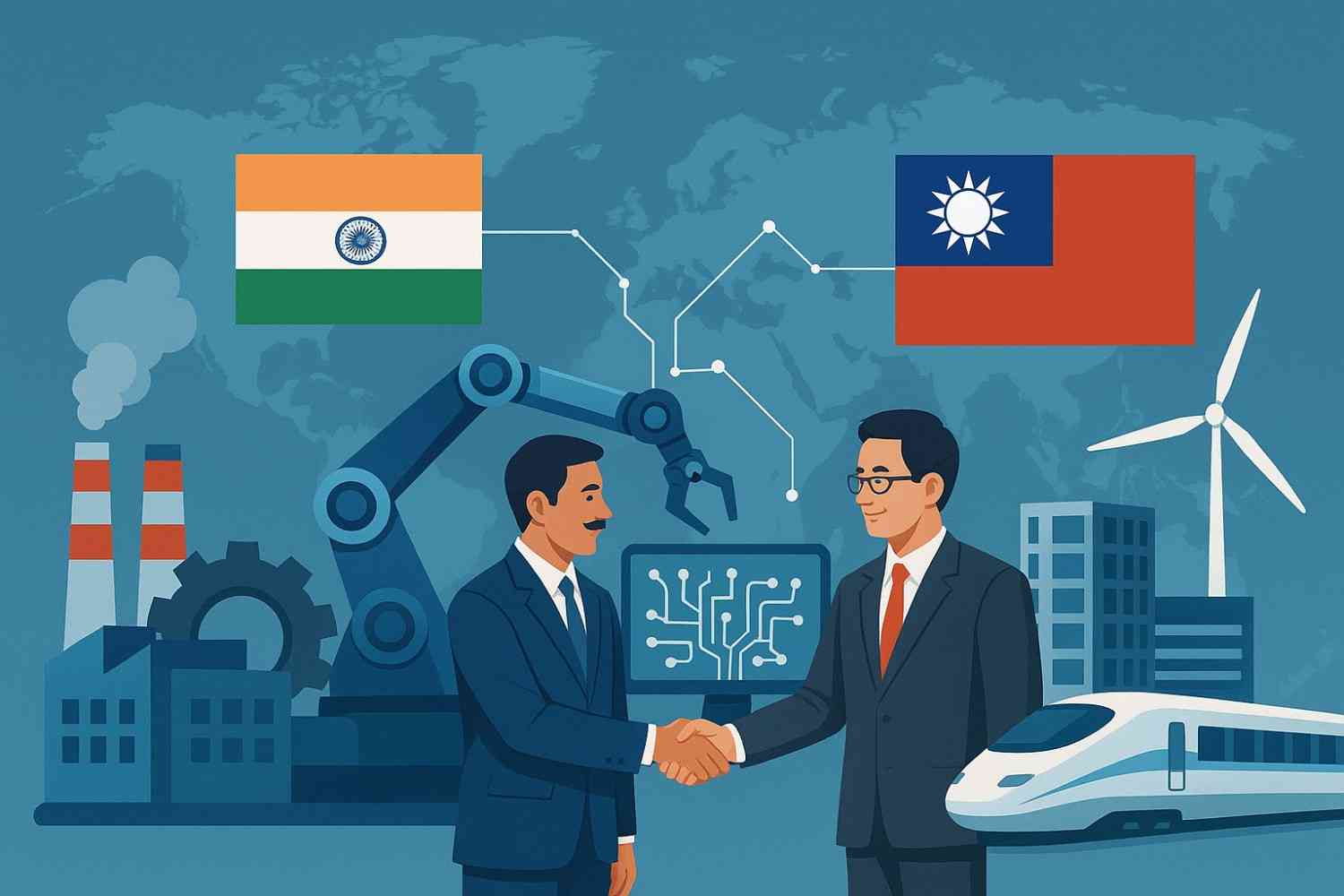
New Delhi, India, September 1, 2025 — The growing economic engagement between India and Taiwan has been one of the most significant shifts in Asia’s commercial landscape in recent years. As India emerges as a global hub for manufacturing, technology, and services, Taiwan’s expertise in electronics, semiconductors, and innovation-driven industries provides a natural synergy for joint ventures. The future of Indo-Taiwanese partnerships promises not only economic growth but also deeper cultural and strategic cooperation.
One of the most promising areas for collaboration is electronics and semiconductor manufacturing. Taiwan’s dominance in chip-making and India’s expanding digital economy create a perfect ground for mutually beneficial ventures. With India seeking to reduce its dependence on imports and build local manufacturing capabilities under initiatives like “Make in India,” Taiwanese companies can find vast opportunities for investment and technology transfer. Joint ventures in this sector could place India on the global semiconductor map.
Another vital space for Indo-Taiwanese cooperation lies in renewable energy and green technologies. As both nations face rising energy demands and environmental concerns, joint ventures in solar, wind, and battery storage technologies can play a transformative role. Taiwan’s technological strengths combined with India’s large-scale deployment capacity can make these projects commercially viable and sustainable. Such collaboration would not only address domestic energy needs but also strengthen the global fight against climate change.
In addition to technology and energy, the manufacturing sector holds immense promise. Taiwan’s experience in precision engineering and India’s growing industrial base can complement each other, leading to the development of advanced machinery, automotive components, and consumer electronics. With India providing access to a large domestic market and Taiwan offering quality expertise, joint ventures in manufacturing could redefine competitiveness in Asia.
The service sector also offers fertile ground for cooperation. India’s strength in IT services, software development, and digital innovation aligns well with Taiwan’s research-driven culture. Joint ventures in artificial intelligence, cybersecurity, and cloud computing can pave the way for cutting-edge solutions. Such partnerships would not only boost innovation but also expand global reach for both Indian and Taiwanese companies in emerging markets.
Education and skill development form another critical pillar for the future of Indo-Taiwanese joint ventures. With India’s young workforce and Taiwan’s advanced training systems, partnerships between universities, research institutes, and vocational centers could enhance human capital. These collaborations would help bridge skill gaps and create a talent pool capable of driving the next generation of industries.
Strategic cooperation between the two nations further adds to the potential of joint ventures. Taiwan, located at a vital point in East Asia, and India, with its growing influence in South Asia and beyond, share common economic and security concerns. Joint ventures in critical technologies, supply chain resilience, and defense-related industries could strengthen their positions in the regional and global order, reducing reliance on external powers.
Cultural and entrepreneurial exchanges will also shape the future of these joint ventures. Shared values of innovation, adaptability, and resilience can help entrepreneurs from both countries collaborate seamlessly. As more Taiwanese firms establish themselves in India and Indian businesses explore Taiwan, trust and cultural understanding will play a crucial role in long-term success.
Looking ahead, the future of Indo-Taiwanese joint ventures appears bright and full of opportunities. By combining Taiwan’s strengths in technology and precision with India’s vast market, skilled workforce, and policy push for industrialization, the two nations are poised to create transformative partnerships. If nurtured with the right policies, incentives, and people-to-people ties, these ventures could become a model for international collaboration in the 21st century.