Global Firms Eye Investments in Goyang Free Economic Zone, Korea
On a visit to India recently, the Korea’s Goyang Special City Delegation received interest from Indian companies in F&B, Automation, Tourism, MICE, Media and More

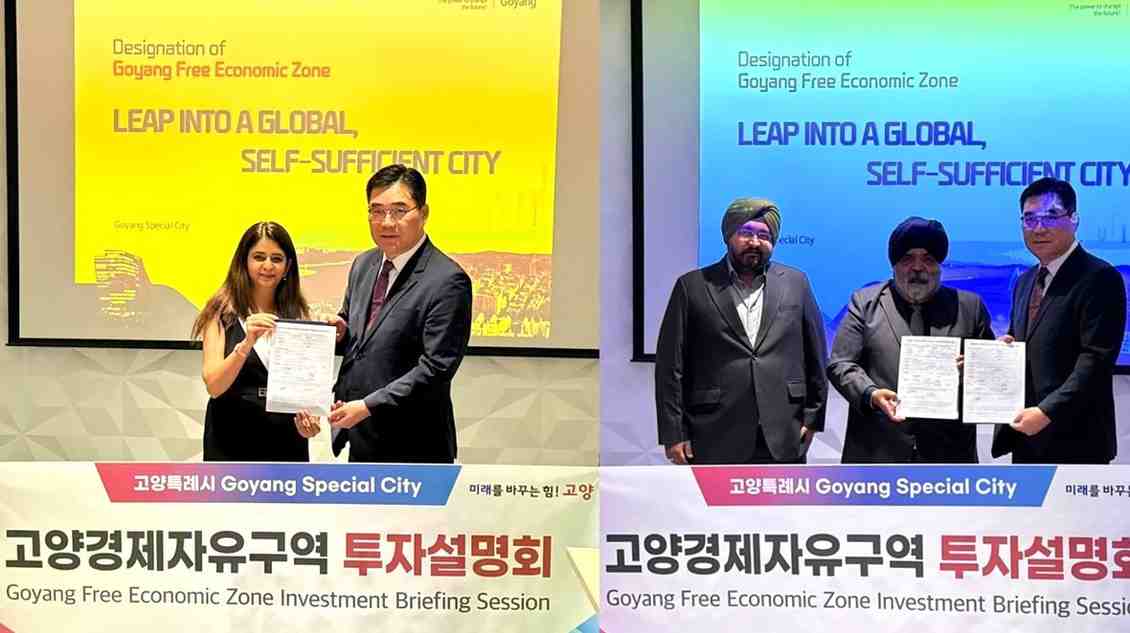
New Delhi, India – In a significant step towards expanding South Korea–India economic cooperation, seven global companies operating in India across diverse sectors – food & beverages, automation and robotics, capsule hotels, housing, manufacturing, news-media, MICE, and logistics, have signed Letters of Intent (LoIs) to explore ventures in Goyang Free Economic Zone (GFEZ).
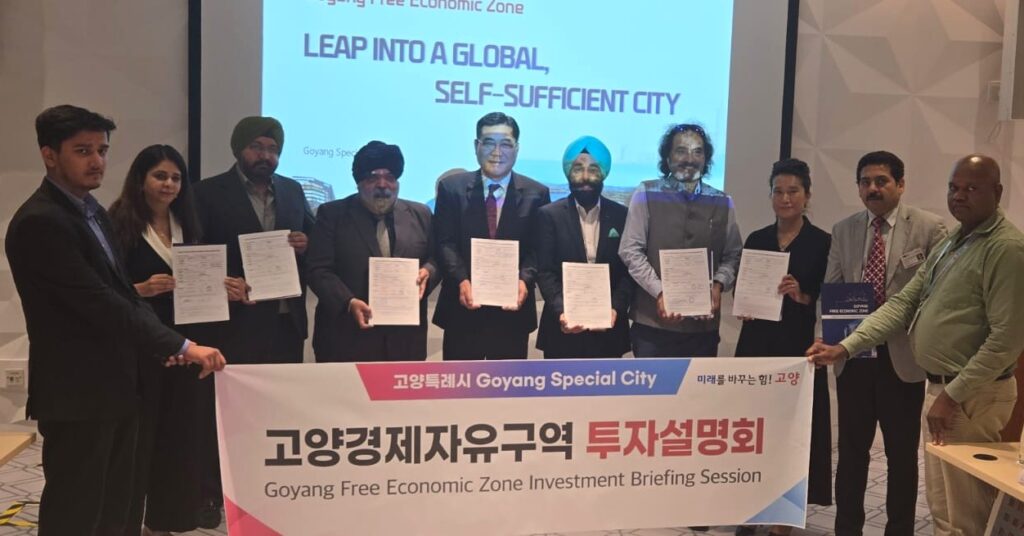 A high-level delegation from Goyang Special City, led by Kim Su-o, Executive Director of the Self-Sufficient City Bureau, visited New Delhi recently to present the business advantages of GFEZ and interact with Indian industry leaders.
He was joined by Lee Jae Yul, President & CEO of KINTEX, South Korea’s largest MICE conglomerate, whose success story is deeply tied to Goyang—the city that serves as its home base. Phil Chung, CEO of Kinexin Convention Management, and the Yashobhoomi Operating Company coordinated for the event.
Companies Sign LoIs for Expansion: The delegation’s visit culminated in the signing of LoIs by seven international companies, including SAMS, Snooze, Foodlink, RE Rogers, ACN Network and others, marking their intent to expand into GFEZ. These companies bring expertise in global food and beverage (F&B) operations, hotel and tourism innovation, advanced logistics, and event management solutions—sectors that closely align with Goyang’s development vision.
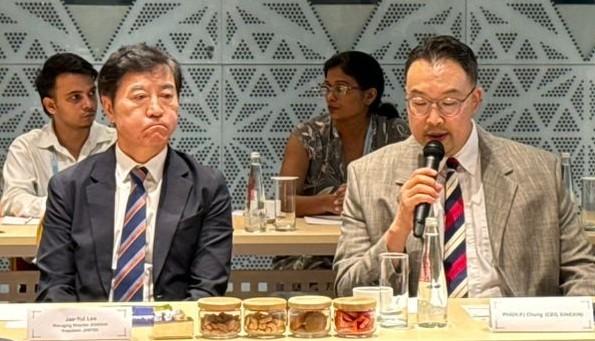 By leveraging Goyang’s proximity to Seoul and Incheon International Airport, along with its world-class infrastructure, these firms aim to position themselves at the heart of Northeast Asia’s trade, technology, and cultural hub.
Why Goyang? A Strategic Investment Destination: The Korea Free Economic Zone is a special economic zone that actively attracts foreign investment, enhancing the business environment and living conditions of foreign-invested companies, and promoting deregulation. Busan-Jinhae, Gwangyang Bay, Gyeonggi, Daegu-Gyeongbuk, Chungbuk, East Coast, Gwangju, and Ulsan have a total of 9 routes that are in operation. KFEZ’s foreign direct investment (FDI.
Reported at the end of 2020, the accumulated value is $ 19.2 billion, and 6,140 domestic and foreign companies, including global companies such as GE and BMW, are operating. Now, KFEZ has become an attractive business investment destination for international investors considering entry into the Asian market.
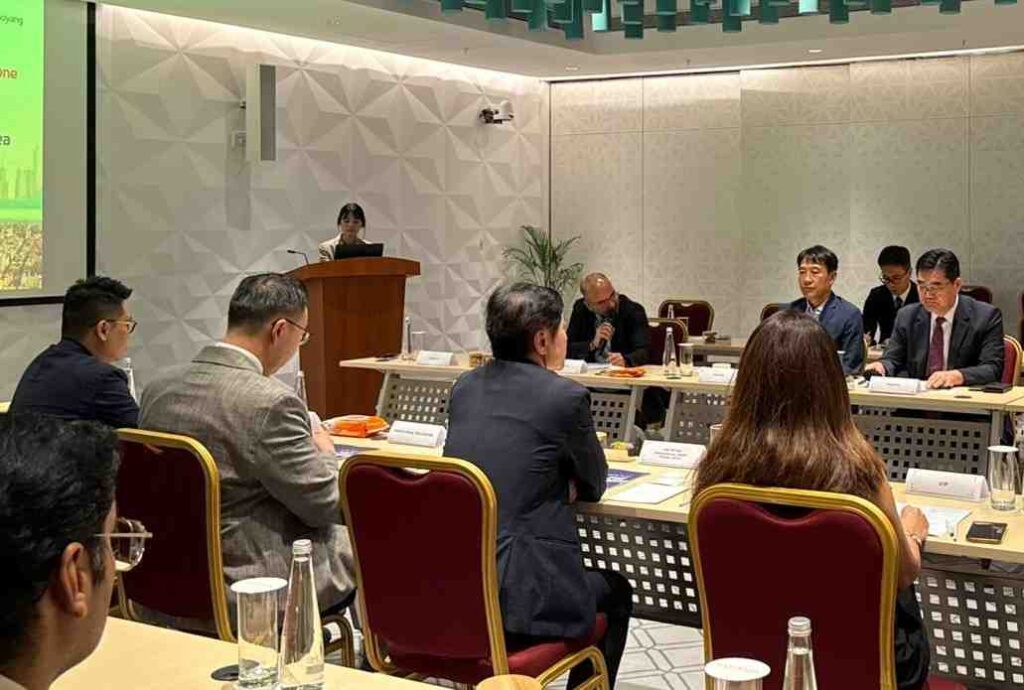 In his presentation, Kim Su-o, Executive Director of the Self-Sufficient City Bureau, said, “Designated in 2024, the Goyang Free Economic Zone spans approximately 9 sq. km across Janghang-dong (Ilsandong-gu), Daehwa-dong and Songpo-dong (Ilsanseo-gu), and will be developed between 2025 and 2036.”
It focuses on four strategic industries: AI, robotics, and semiconductor-driven future industries; eco-friendly mobility (such as UAM, drones, and autonomous vehicles); K-Contents and broadcasting clusters; and Global MICE and healthcare hubs.
Major development projects include KINTEX 3 (completion in 2028), the Ilsan Techno Valley, the Broadcasting & Culture Contents Valley, and a youth-focused housing district, backed by investments exceeding several trillion KRW.
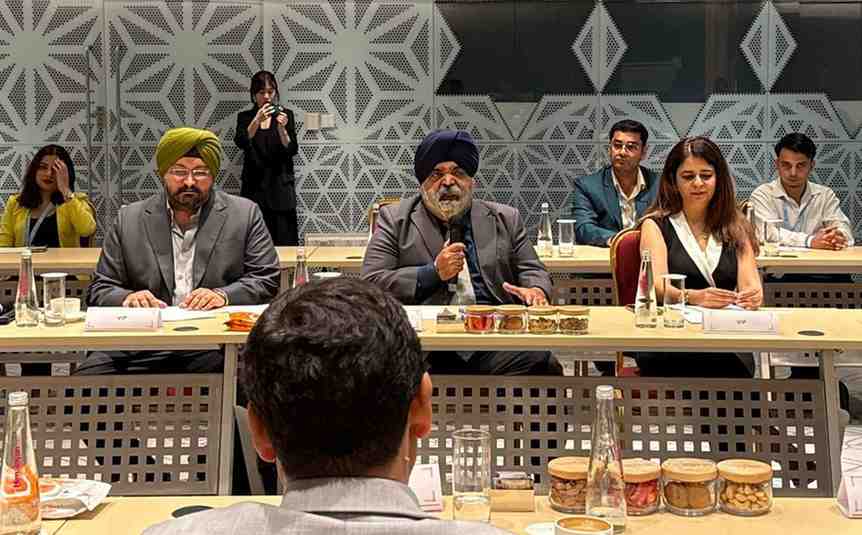 Attractive Incentives for Global Companies: The GFEZ offers a wide range of investment incentives, including exemptions from tariffs, VAT, and property tax for up to 15 years, a reduction in acquisition tax on real estate for the first 10 years, free contracts for purchasing/leasing public land at cost price, and regulatory relaxations compared to Seoul Metropolitan overcrowding controls.
These investor-friendly measures are supported by the newly established Goyang Investment Agency, which provides one-stop services, policy financing, and SME venture support funds (approx. 100 billion KRW).
Tapping into a Global Ecosystem: With a population of 1.07 million, Goyang is part of a larger metropolitan region of 26 million residents, seamlessly connecting it with Seoul and Incheon. Notably, 70% of Korea’s R&D centres and 113 universities with 1.08 million students are located within commuting distance—offering unmatched access to skilled manpower.
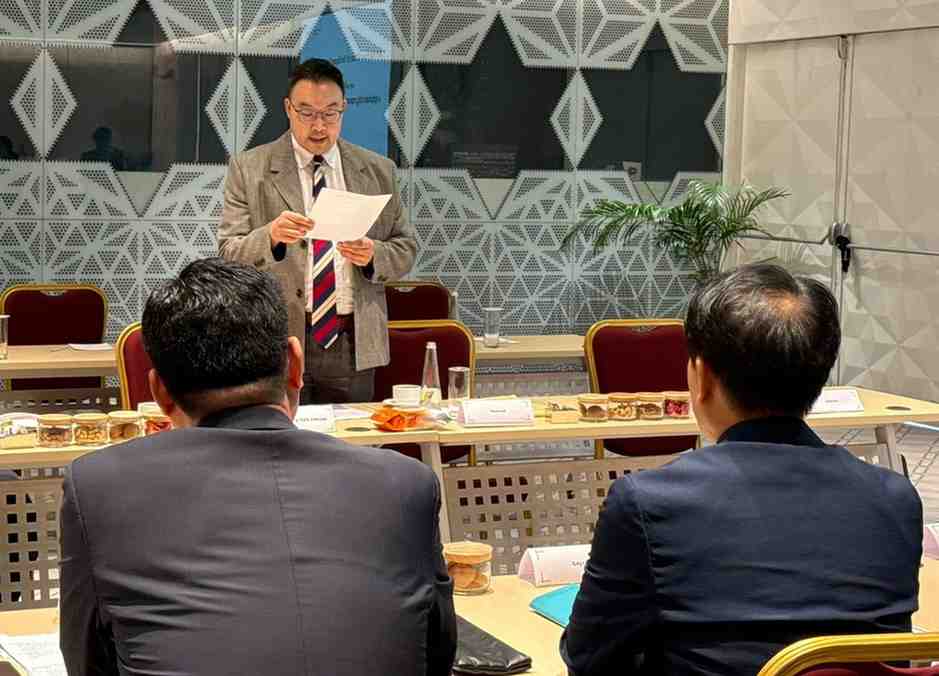 Highlighting the city’s global outlook, Goyang has already attracted 76 MoUs with global entities, including AEG (the world’s top entertainment company) and the Luxembourg Institute of Health, along with 127 Letters of Intent from global biotech and technology firms.
Strengthening Korea–India Economic Ties: The entry of Indian-based companies into GFEZ signals not just commercial expansion, but also a strengthening of bilateral economic ties. With companies like Foodlink and SAMS representing India’s growing presence in the global food and beverage (F&B) and hospitality sectors, and logistics leaders such as RE Rogers aligning with Goyang’s MICE expansion, these collaborations are expected to fuel cross-border trade, investment, and cultural exchanges.
Speaking at the event, Kim Su-o emphasised, “With the foundation of the Goyang Free Economic Zone, we are building a global city representing the Republic of Korea. The participation of Indian enterprises is a step towards shared prosperity and innovation.”
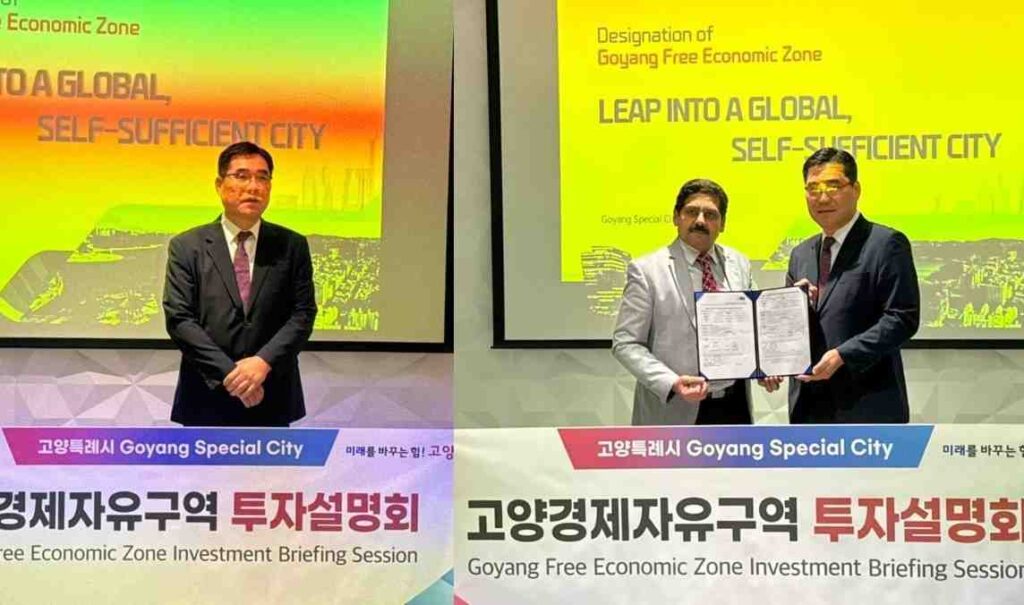 The LoI signing marks the beginning of a new chapter in the Korea–India economic partnership, positioning Goyang as a gateway for Indian companies into Northeast Asia’s dynamic markets.
Info-Box: Salient Features of the Goyang Free Economic Zone (GFEZ):
Location:
- Goyang Special City, South Korea
- 9 sq. km in Janghang-dong (Ilsandong-gu), Daehwa-dong & Songpo-dong (Ilsanseo-gu)
Project Period:
- 2025 – 2036
Key Strategic Industries:
- AI, Robotics, Semiconductors, Future Mobility (UAM, Drones, Autonomous Vehicles, Eco-friendly cars)
- K-Contents, Broadcasting & IP Convergence Clusters
- Global MICE (KINTEX 1–3, 4,700 hotel rooms planned)
- Healthcare & Food-Tech (National Cancer Data Center, 7 general hospitals)
Major Development Projects:
- KINTEX 3: Exhibition & cultural complex (completion by 2028)
- Ilsan Techno Valley: High-tech industries (4th Industrial Revolution)
- Broadcasting & Culture Contents Valley
- Youth & Family Housing Projects
Investment Incentives:
- Tax exemptions:
- Tariffs, VAT, and property tax (up to 15 years)
- Acquisition tax: 100% exemption (first 7 years), 50% (next 3 years)
- Land benefits:
- Public land available at cost price via free contracts
- Regulatory relaxations:
- Exempt from Seoul Metropolitan Area overcrowding restrictions
Workforce & Ecosystem:
- Part of Greater Seoul-Incheon area (26 million people)
- 70% of Korea’s R&D centers nearby
- 113 universities, 1.08 million students within commuting distance
Global Investment Track Record:
- 76 MoUs signed (e.g., AEG, Luxembourg Institute of Health)
- 127 Letters of Intent with global biotech & tech firms
- Partnership with Woori Bank and global investors
Connectivity:
- Seoul (Gangnam): 23 mins (GTX)
- Gimpo Airport: 20 mins by car
- Incheon Airport: 40 mins by car