Korea–India Future Society Launched in Seoul to Deepen Economic and Cultural Ties
It is South Korea’s first private-sector initiative focused on India, uniting diplomats and industry leaders to chart a new era of collaboration beyond traditional East Asian partnerships.

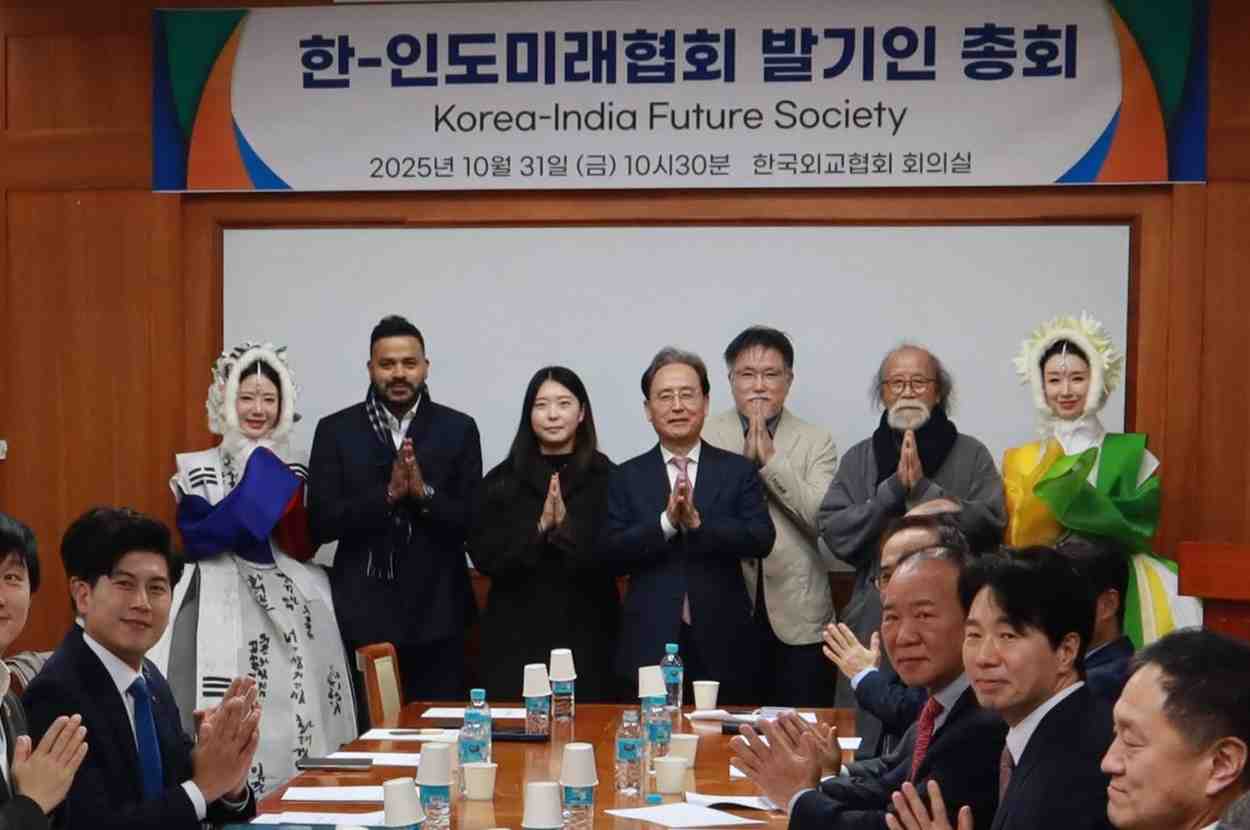
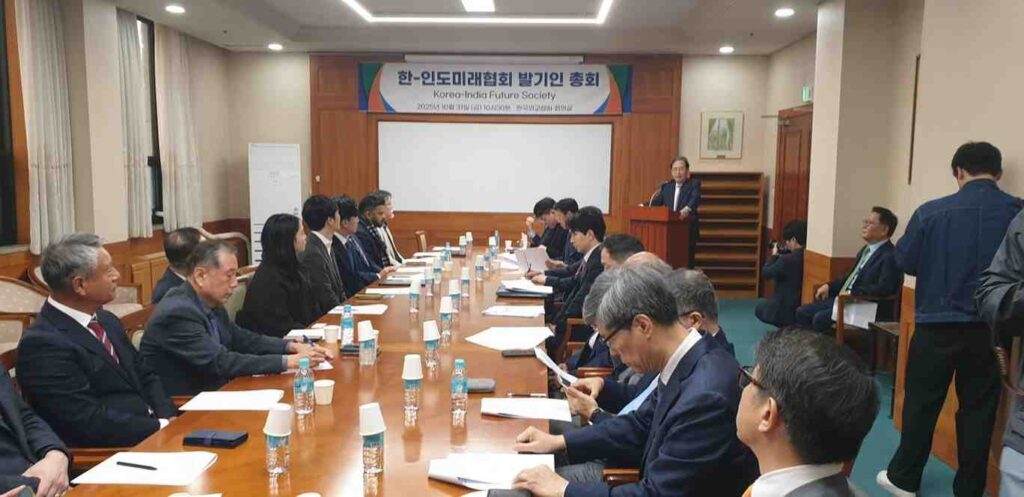
Seoul, South Korea – South Korea marked a significant step in strengthening ties with India through the establishment of its first private-sector Korea-India friendship association, reflecting an evolving strategic shift beyond its traditional focus on China and Southeast Asia. The inauguration, held on Saturday, brought together former and current diplomats alongside a diverse range of businesses, from global conglomerates to small and medium-sized enterprises, underscoring a united drive to bolster economic and cultural relations.
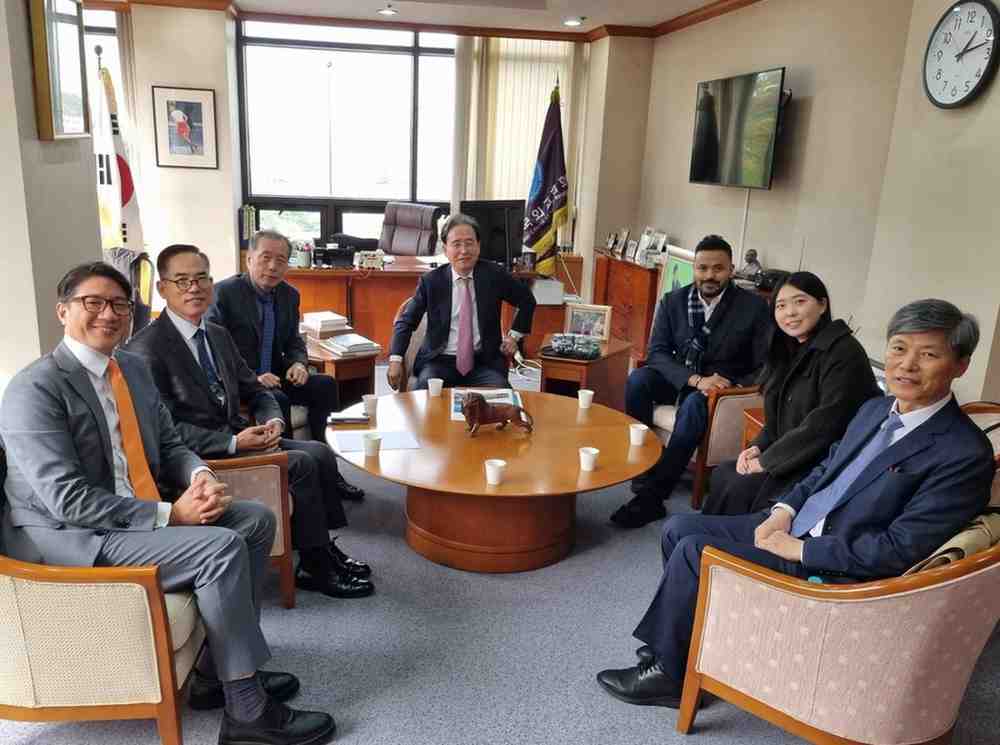 The new entity, Korea–India Future Society, was addressed by Shin Bong-kil, noted for his tenure as South Korea’s ambassador to India from 2018 to 2021. This society aims to narrow the gap in understanding between the two countries amid blossoming business interests from Seoul toward India.
Unlike existing associations focusing on Korea-China relations, this initiative seeks to focus on the future of the Korea-India partnership by emphasising collaboration and long-term engagement.
Shin highlighted the demographic and economic promise India holds as the world’s most populous nation with a youthful median age, poised to surpass China in size and economic activity with steady growth of nearly seven per cent annually. Despite these opportunities, India’s depth of understanding within Korean circles remains limited, a gap the society intends to address.
 The launch drew notable attendance from leading Korean corporate icons, including Posco, Samsung Electronics, LG Electronics, and LG Chem, as well as SMEs such as AutoGen, which has established manufacturing capabilities in India. Cultural ambassadors, such as Abhishek Gupta, popularly known as Lucky from JTBC’s “Abnormal Summit,” also participated, signalling the growing cultural exchanges between the countries.
While Indian markets have witnessed robust IPOs from Korean firms—LG Electronics’ $1.3 billion listing and Hyundai Motor’s $3.3 billion offering in recent years—the bilateral trade volume, currently at approximately $20 billion, still lags behind Korea’s trade with Vietnam and China.
 With around 700 Korean companies operating in India, experts like Park Euy-don, managing director of New Delhi-based Seela Infratech, believe this figure should scale tenfold to match India’s vast market potential. Park has successfully run his business operations for the past two decades and has established a name in the Korean retail chain industry.
The multifaceted nature of India’s market, encompassing diverse cultures, layered federal and state regulations, and unique business practices, presents ongoing challenges. Major corporations have adapted by locally listing subsidiaries to better address India’s regulatory complexities, a tactical move to smooth operations amid administrative fragmentation.
AutoGen’s focus on manufacturing ultra-high-strength steel components for automotive use in Pune illustrates how Korean businesses are strategically embedding themselves within India’s industrial landscape.
With this private Korea-India association steering closer relations, the tide appears set to turn toward more robust cooperation, encouraging both nations to deepen economic, cultural, and strategic partnerships over the coming years.