
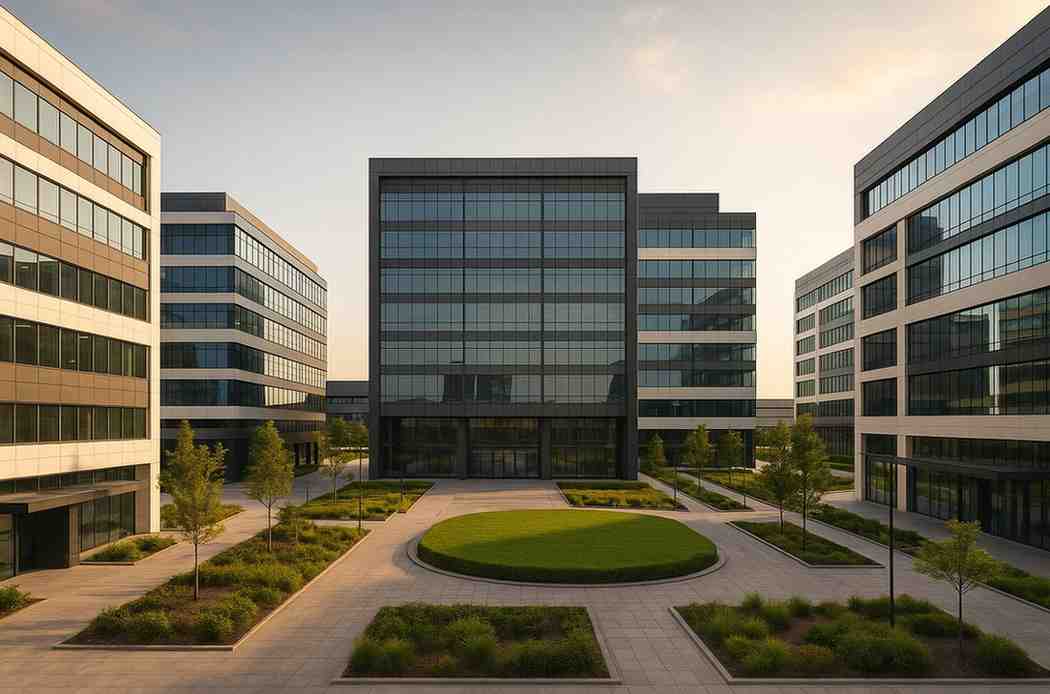
New Delhi, India, August 5, 2025 — The arrival of new Korean business parks, popularly called “K-Business Parks,” in India marks a significant milestone in the strengthening economic ties between India and South Korea. These parks are being set up across several Indian cities with the aim of providing integrated facilities for Korean companies investing in India. They are expected to transform the way Korean businesses operate in India by offering modern infrastructure, dedicated spaces, and streamlined processes that cater specifically to Korean enterprises.
K-Business Parks are not just office spaces; they represent an ecosystem designed to support Korean SMEs and conglomerates alike. Each park will typically include state-of-the-art office complexes, research and development centers, warehousing units, and exhibition spaces. This integrated model ensures that businesses can set up, operate, and expand without the hassles often faced when navigating unfamiliar regulatory and logistical environments in a new country.
One of the key features expected in these parks is a single-window clearance system tailored for Korean investors. This will simplify permissions, licenses, and compliance procedures, which are often considered bottlenecks in India’s business environment. By reducing bureaucratic delays, K-Business Parks aim to attract more Korean companies to invest, manufacture, and innovate in India, thereby deepening the economic partnership between the two nations.
Moreover, these parks will also provide residential complexes and social infrastructure for Korean expatriates and their families. This includes Korean schools, healthcare facilities, Korean restaurants, and cultural centers, ensuring a comfortable living environment and a smooth cultural transition. Such amenities are crucial for long-term investments as they encourage Korean professionals to relocate with their families, thereby boosting human resource stability for businesses.
Another significant advantage is the creation of a shared network for Korean businesses within each park. By clustering multiple companies in a single location, the parks will enable collaboration, joint ventures, and knowledge-sharing. This can lead to faster innovation cycles, cost efficiencies, and a robust Korean business community in India. The presence of Korean banks and legal firms within the parks will further ease financial transactions and contractual processes.
In addition to benefiting Korean firms, these business parks will have a positive impact on local Indian economies. They are expected to generate employment opportunities for Indian workers in fields such as construction, administration, manufacturing, logistics, and IT support. Local suppliers and service providers will also see increased demand, which can lead to growth in surrounding communities and boost regional economic development.
Environmentally, many K-Business Parks are planned with sustainable features like solar energy installations, rainwater harvesting systems, waste recycling facilities, and green building certifications. By incorporating eco-friendly practices, they set a benchmark for future industrial and commercial developments in India, aligning with both India’s and South Korea’s commitments to sustainable growth and climate action.
Overall, the launch of K-Business Parks across India is set to redefine the landscape of bilateral trade and investment. They symbolize a new era of cooperation that extends beyond traditional sectors into advanced manufacturing, technology, and services. For both countries, these parks hold the promise of shared prosperity, cultural exchange, and deeper mutual understanding, paving the way for a stronger strategic partnership in the coming decades.