Taiwan a Strategic Education Partner for India’s Next-Gen Talent: Dr. Wang Wei-Chung
Ten leading Taiwanese universities and Talent Taiwan showcase new academic and innovation pathways for Indian students at the TECC New Delhi.

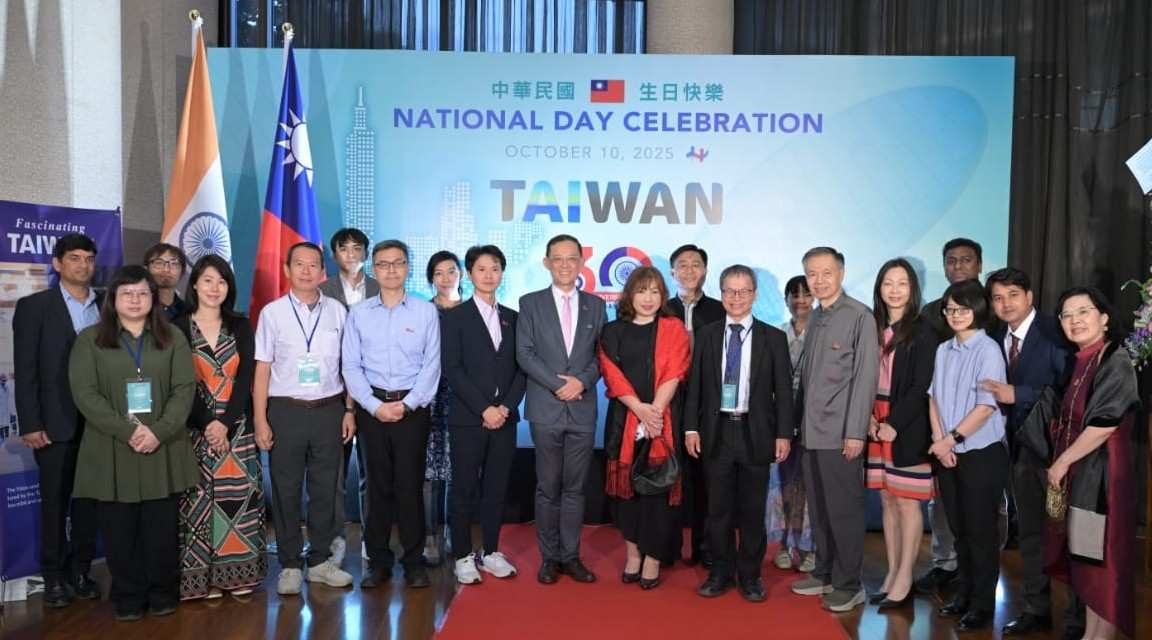
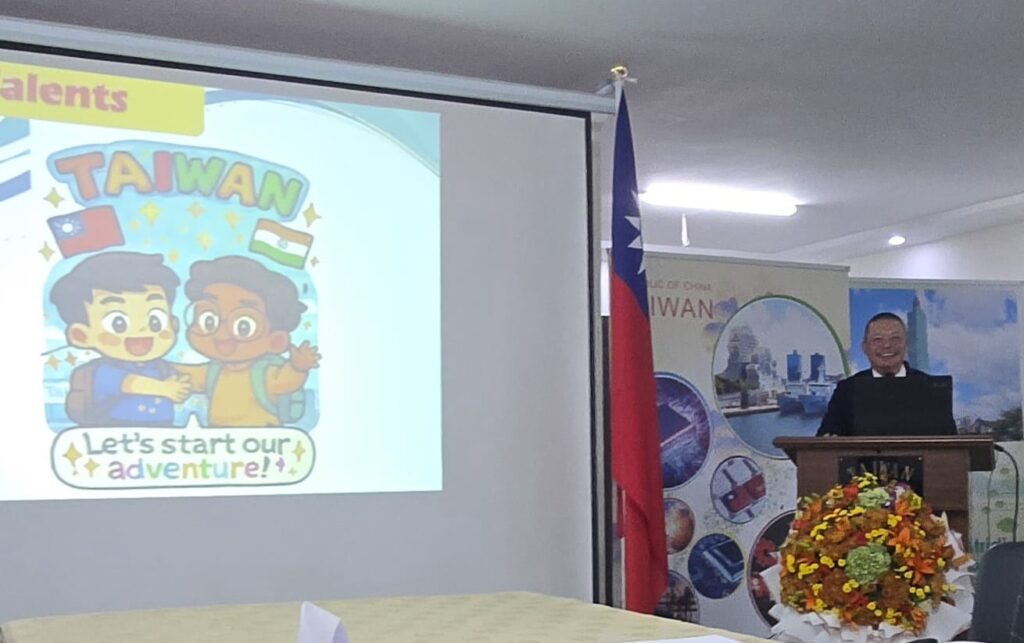
New Delhi, India — Taiwan’s growing role as a key higher education and research hub for Indian students and professionals was underlined by Dr. Wang Wei-Chung, Director of the Program Office for Taiwan Education Centre in India and Professor at National Tsing Hua University (NTHU), during a presentation at the Taipei Economic and Cultural Center (TECC) in New Delhi on Friday.
The event, attended by representatives from 10 top Taiwanese universities — including five national and five private institutions, alongside the Talent Taiwan – International Talent Taiwan Office — showcased the academic strength, industry integration, and global appeal of Taiwan’s education ecosystem.
Ms Jill Lai, Assistant Representative and Director of Education, TECC, New Delhi, and Dr Lung-Jieh Yang, Counsellor & Director, Science and Technology Division, TECC, New Delhi, were also present on this occasion. Robert Hsieh, Deputy Representative, TECC, New Delhi, made a presentation on “Welcome to Taiwan’s Smart School”.
Dr Wang, who has been to India 54 times, emphasised that Taiwan’s blend of high academic quality, welcoming culture, and innovation-driven industries makes it an increasingly attractive destination for international learners.
Citing the 2022–2023 “Study in Taiwan” survey, he noted that nearly 45% of students choose Taiwan for its friendly environment, followed by strong academic reputation (42.7%), career prospects (35.8%), and affordable education (35.2%).
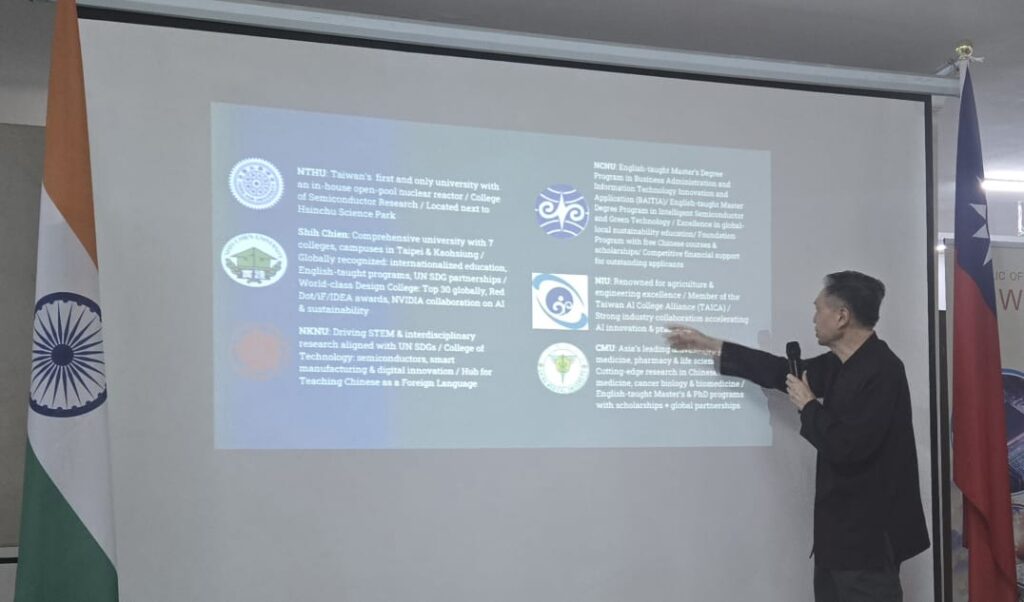
“Taiwan’s universities are not only academically rigorous but also deeply connected with global industry and sustainable development goals,” Dr Wang said, adding that these qualities align strongly with India’s ambitions to expand its research and technological capacity.
To attract top global minds, Taiwan offers a vast network of scholarships — from the MOE and MOFA Taiwan Scholarships to the TaiwanICDF and Huayu Enrichment Programs — covering degree studies, Chinese language learning, internships, and research fellowships.
The Talent Taiwan visa, valid up to three years with family benefits and a path to permanent residency, was highlighted as a significant incentive for professionals and researchers seeking long-term engagement.
Dr Wang’s data underscored that engineering remains the most popular discipline among Indian students, who are now enrolled in large numbers at premier universities such as NTHU, National Yang Ming Chiao Tung University, and National Taiwan University.
At Academia Sinica, Taiwan’s apex research institute, over 100 Indian talents are already contributing as postdoctoral researchers and fellows — primarily in physics, life sciences, and AI-driven technologies. Indian scholars also form nearly 20% of all international students in the Taiwan International Graduate Program (TIGP), a joint PhD platform between Academia Sinica and 10 top universities.
In his concluding remarks, Dr Wang described education as “the most sustainable bridge between India and Taiwan,” noting that Taiwan’s open, democratic, and innovation-led model resonates deeply with India’s aspirations for technological advancement and global integration.
“From semiconductors to AI, from medicine to design, Taiwan offers India not only classrooms but living laboratories for the future,” he said.
The session concluded with interactive discussions between visiting Taiwanese delegates and representatives from Indian institutions, reaffirming a shared commitment to expand student exchange, dual-degree programs, and joint research in emerging technologies.
The delegation included leading institutions:
- National Tsing Hua University (NTHU) — Taiwan’s first and only university with an in-house nuclear reactor and a College of Semiconductor Research, located next to Hsinchu Science Park, the heart of Taiwan’s chip industry.
- Shih Chien University — globally renowned for its design and sustainability programs, with Red Dot and iF award-winning students.
- National Kaohsiung Normal University (NKNU) — a key player in STEM and semiconductor research aligned with the UN SDGs.
- National Chi Nan University (NCNU) — known for English-taught programs in business, IT innovation, and green technologies.
- National Ilan University (NIU) — a leader in agriculture and AI-based engineering, and a member of the Taiwan AI College Alliance.
Private universities such as Chung Shan Medical University (CMU), Providence University (PU), National Formosa University (NFU), Kaohsiung Medical University (KMU), and Tamkang University (TKU) also presented their globally accredited, industry-linked programs that emphasise AI, medicine, and sustainable technologies.